Hieroglyphs

September 16th, 2010

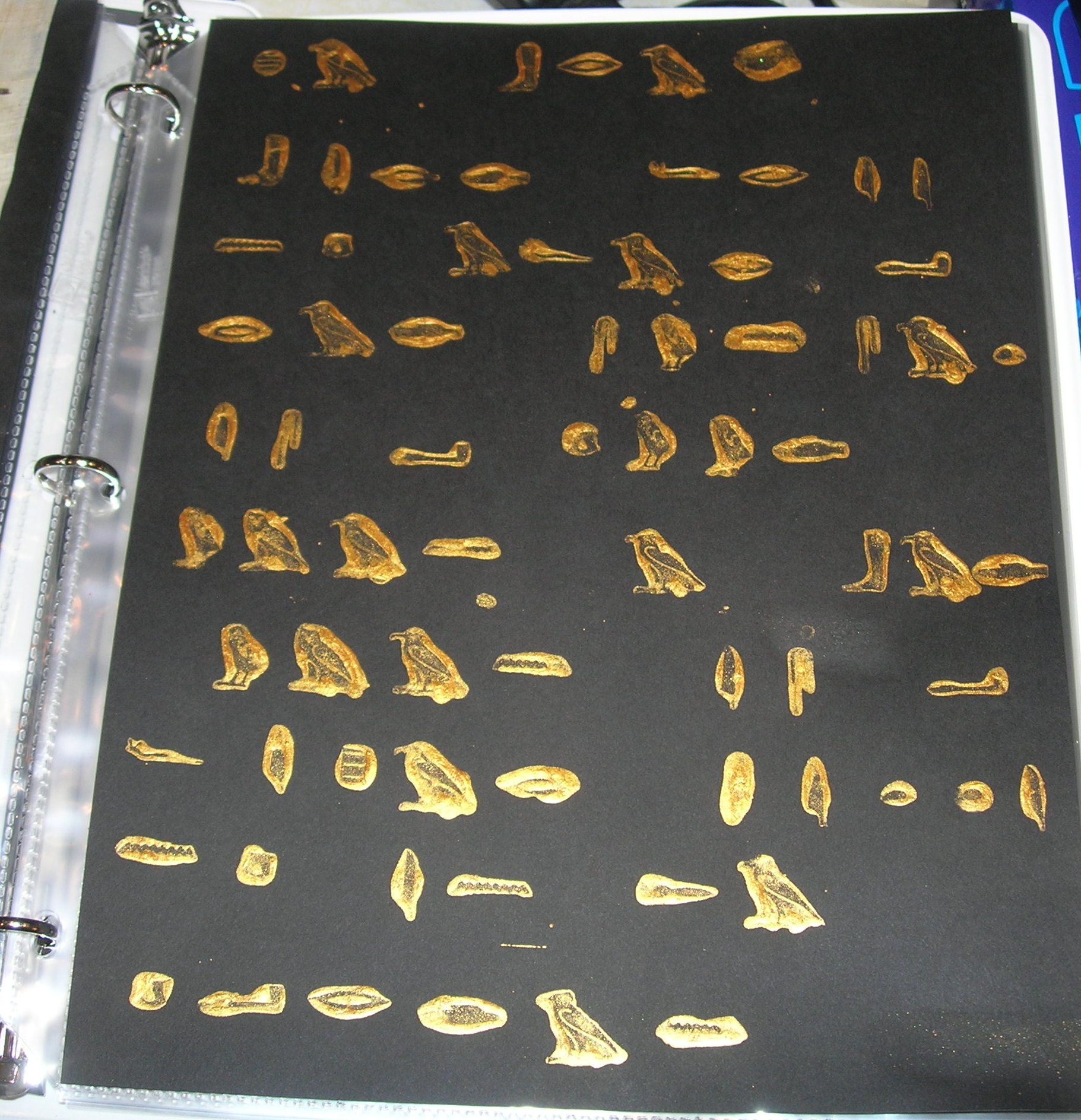
hieroglyphsMy children have enjoyed drawing hieroglyphs and rubber stamping them. (If you want to see the hieroglyph rubber stamps, look at my YouTube video on Ancient Egypt.) My 10-year-old son said that he was a scribe, and he wrote a full page of hieroglyphs in pencil, telling a story. He rolled up the sheet of paper, came over to me, and said, “Where is my Ancient Egypt costume?” I told him the one I made was too small; that it was his brother Stephen’s now. Maybe next week or the week after I’ll make him another one. (Besides, I’m still figuring out how to spread the fabric glue faster, because for my conference workshop next March, I’ll be doing a workshop entitled “Using Simple Costumes and Props to Teach the Bible.” In that conference workshop, my opening act is to make a simple Bible costume in five minutes with no sewing. I’m researching the fastest way to make it.)

Anyway, my son wanted to be an Egyptian scribe because, he said, his work contained all the wisdom of Ancient Egypt.

For rubber stamping the hierpglyphs, we dipped the rubber stamp (with one hieroglyph on it) into some gold paint. Then we stamped it on black paper. I’ve never seen that done before. I just made it up because it looked cool. To make it easier, put a very shallow puddle in a wide jar lid. Then when you dip it, it won’t be completely immersed in gold paint. (Yellowish-gold paint is the best color for this project.)
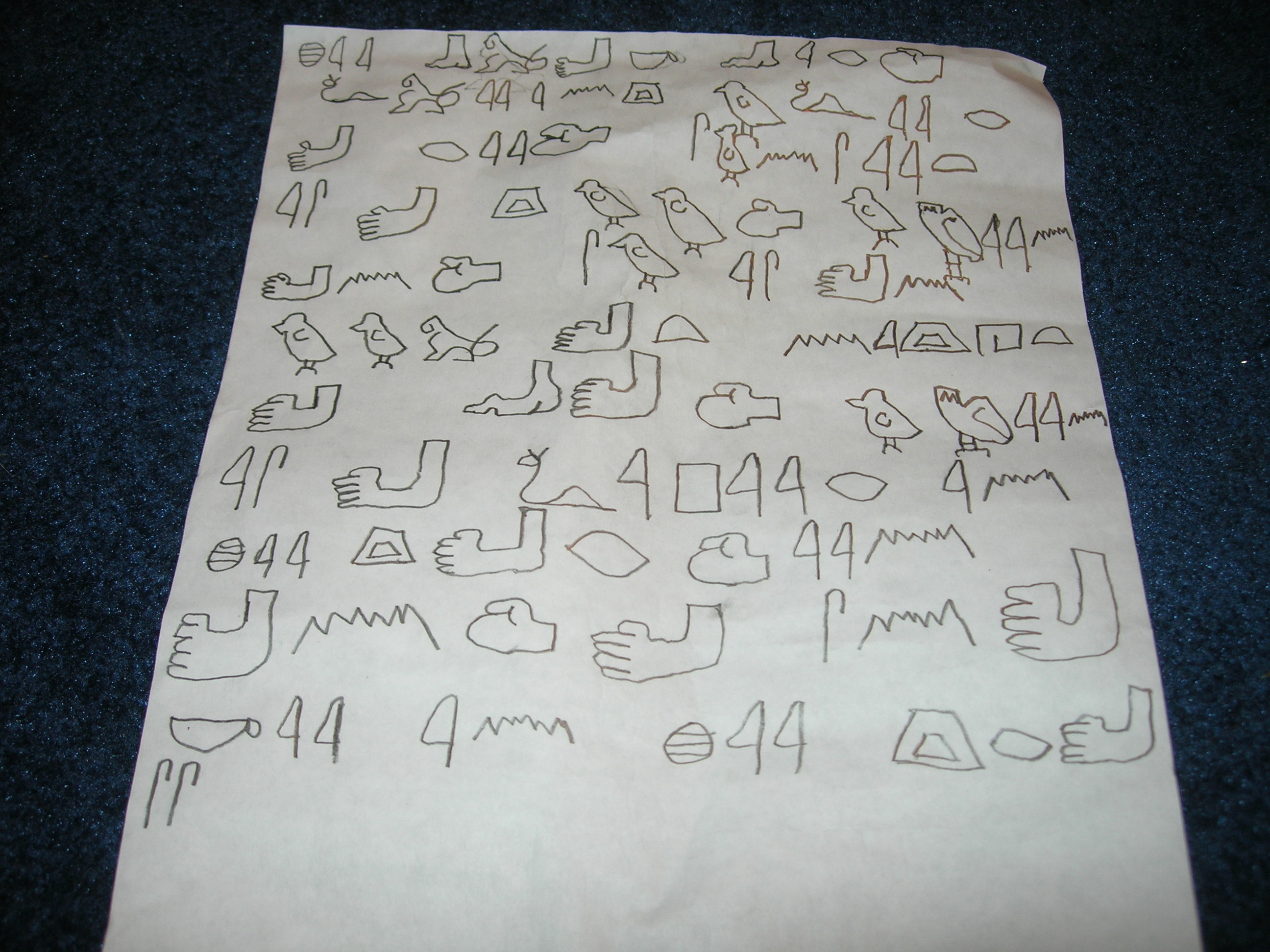
Bryan wrote the following message in hieroglyphs (he made this up out of his imagination): “The black bird flying over a red sunset is a good omen. A bad omen is a viper sitting in the garden.”

Stephen wrote: “A good omen is a flower at sunrise. A bad omen is a vulture around a pyramid.” He just made that up, too, based on Bryan’s sentence structure.

My daughter just rubber stamped the entire hieroglyph alphabet, and Nathaniel wrote a simple sentence and signed his name, all in hieroglyphs.

Later when we watched a video about Egypt, the kids were actually reading the hieroglyphs on the walls of Egyptian tombs! They recognized the different sounds, anyways. I thought that was neat.
Anatomy Display (Science Learning Center)

September 15th, 2010

anatomy-display

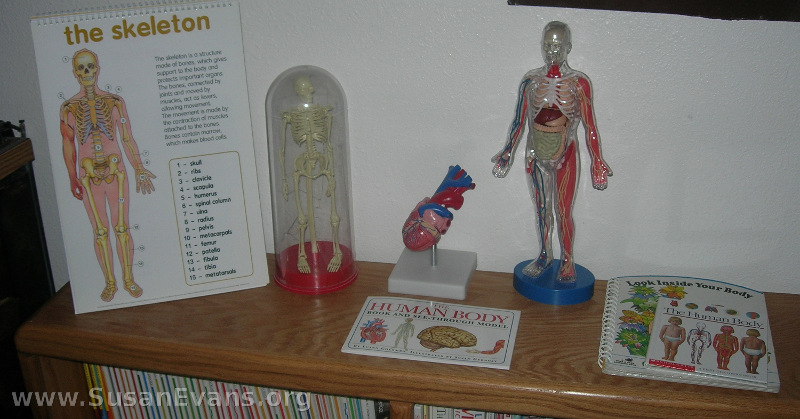
Since my YouTube video clip about organizing educational bins was highly popular, I thought I’d share another example of an educational display that is a science learning center. The bin that I showed you in the video clip was about anatomy, and here was the science learning center that I set up for my children during that unit.

We had several fun books that had clear overlays with each system of the body. I had a skeleton model that I bought for a dollar at a used curriculum sale. The anatomy chart was purchased at a teacher supply store, and it helped the children to learn the different body systems, which they drew, life-sized, of their own bodies traced on butcher paper. The human heart opens up, and you can see the different chambers. This would be good for high school, too, because it was very detailed. I got that at a teacher supply store as well. Let’s see, oh, yeah, we also had a see-through model of the systems of the body. That was kind of frustrating, actually, even though the kids loved it, because it was hard to stuff all the body parts back inside. Anyway, I hope this display is helpful to you as you homeschool your own children and get them excited about learning a specific subject.

If you would like more information on organizing your house to have more joy as you homeschool (and more fun!) feel free to get Organizing for a Fun Homeschool, two one-hour, jam-packed video sessions giving you a tour of my home and how I do things with my children. Many homeschooling mothers have come over to my house over the years, and all of them have taken lots of notes and asked lots of questions. I’ve answered everything in these videos.

Egypt Cookies

September 13th, 2010

Egypt-cookies

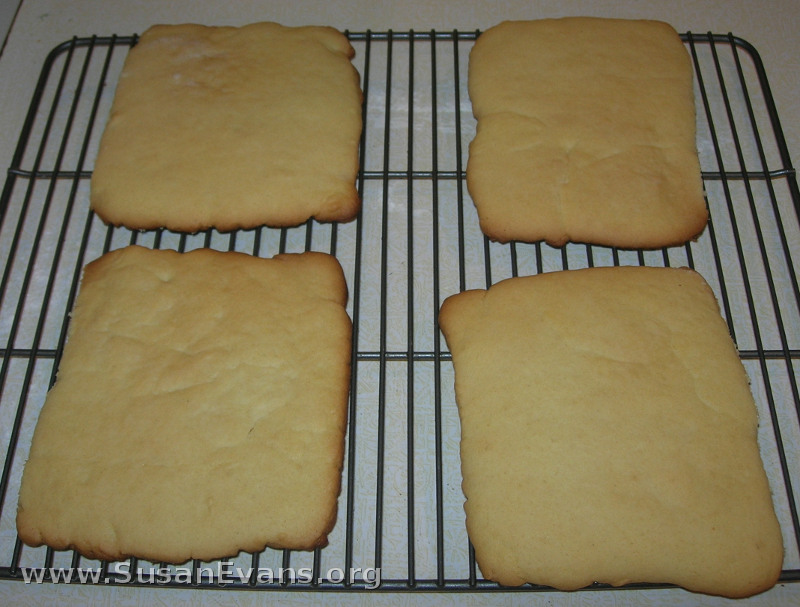
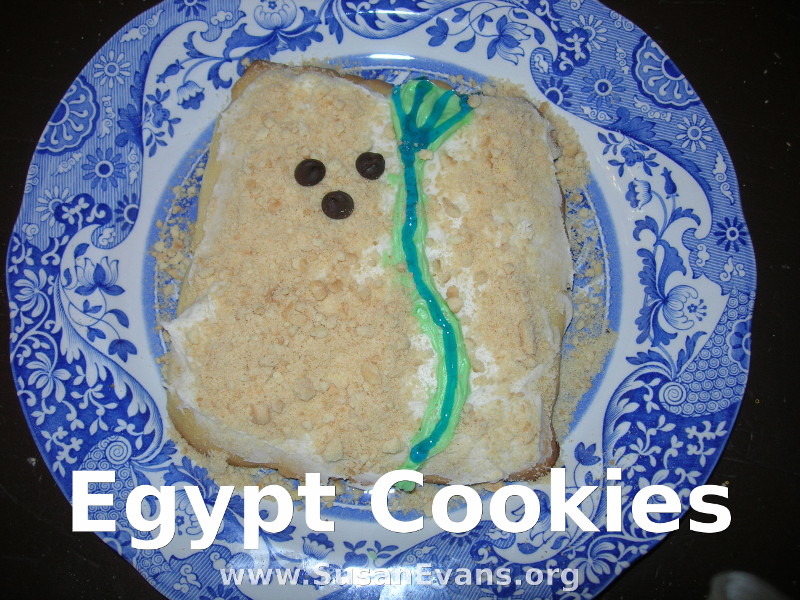
My kids decorated cookies to represent the country of Egypt. First I mixed up a batch of sugar cookies and put them in the fridge. The next day, I took half the dough and rolled it out. I cut out four rectangles using a knife. With a spatula, I tried to transfer the dough rectangles onto the cookie sheet. I said “tried” because a couple of them fell apart. (I’m not good at making pie crust either.) I smooshed them back together on the greased cookie sheet, with no one noticing. I baked them. They cooled.

cookies

Then I called the children over. They cheered and jumped up and down with glee. “Are we having this for lunch?” they asked.

frosting-cookies

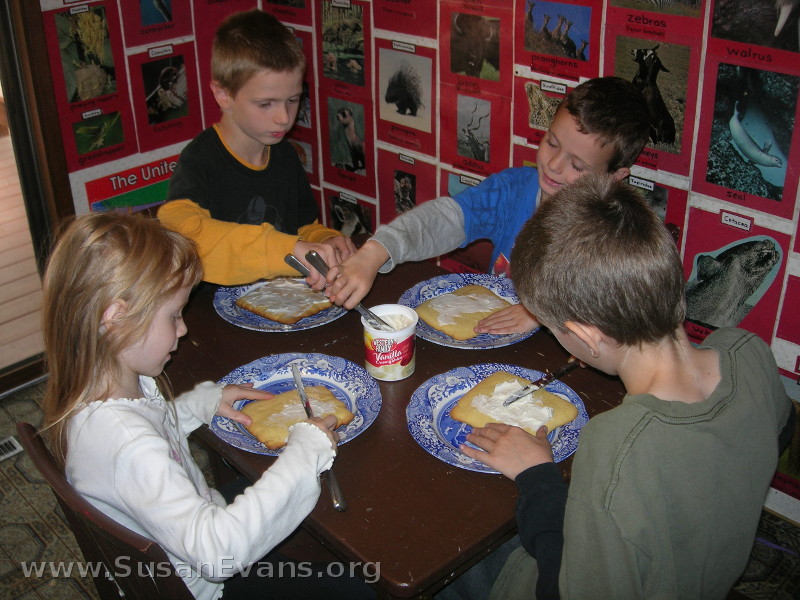
I didn’t answer. I told them to sit down. I handed each kid a butter knife, and I put the white icing in the middle of the table. The kids covered their cookies with icing as the base or “glue” that would hold everything else in place.

pounding-cookies

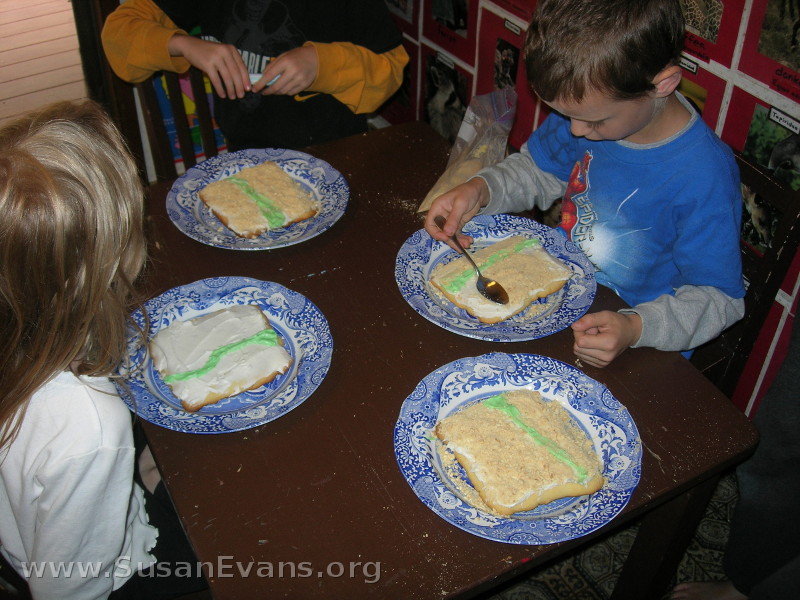
When no one needed white any more, I dyed the rest of the icing green. The children used their knives to make an upside-down triangle on the top of their cookie, representing the fertile Nile Delta. They made a fat line going down the rest of the cookie, about the thickness of the butter knife.

cookie-crumbs

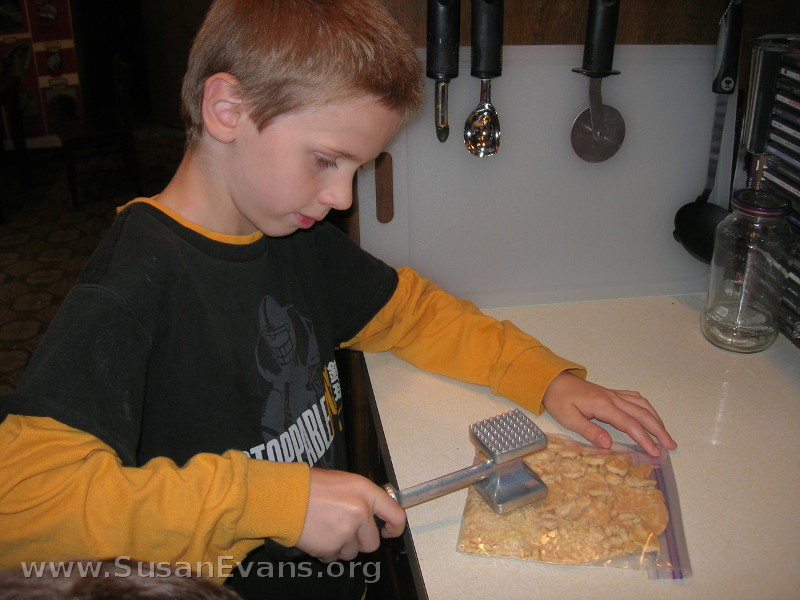
Normally to make sand on a cake, I crumble up generic graham crackers from Walmart, the ones that cost $1. But I was in Rosaurs, and their cheapest graham crackers were $4. So I bought generic lemon cookies. We scraped off the stuff in the middle of the cookie and put the bare cookies into a ziplock bag. We pounded the cookies to smithereens. (One of my sons used the wrong end of the mallet and punched lots of tiny holes in the bag, so watch which end you’re using. A hammer would work just as well. Use a nice, thick bag, not a cheap one.)

eat-cookie

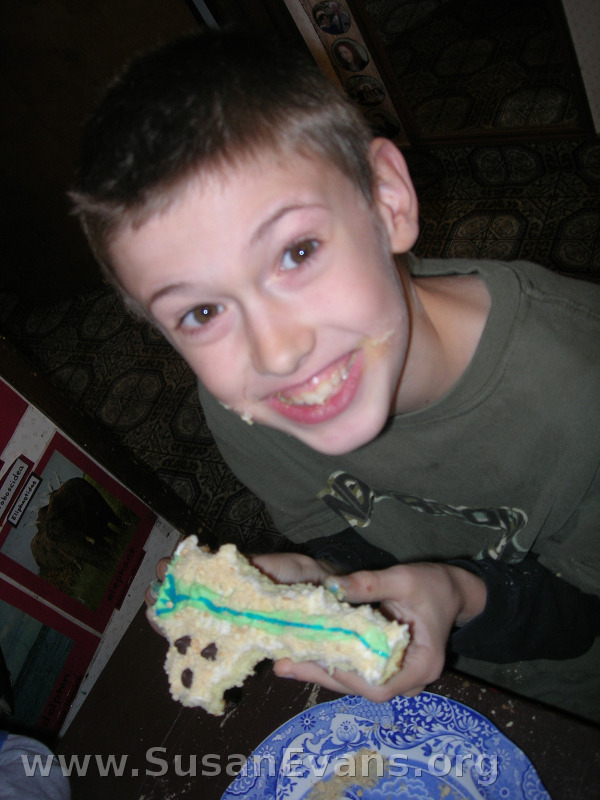
I snipped off the blue tube of icing – it’s called “writing gel”– and you can find it at your grocery store near the icing. Otherwise there’s no way for you to make the thin line that the Nile River needs to be. The kids squeezed it like a tube of toothpaste down their cookie.

We added three chocolate chips for the three great pyramids. And voila! Edible Egypt! I fed my children vegetables, fruit, and protein before they ate the enormous cookie. What a delicious history class! The kids ate their homework, and no one got in trouble.

Map of Egypt

September 11th, 2010

map-of-EgyptWhenever you study a country, you ought to color a map of it, no matter what age you are. It helps you to remember the shape of the country, the rivers, and whatever else is on the map, like the major cities. I love this particular map of Egypt because it has some cartoon-like cultural stuff on it. Kids love it, and they can see where the pyramids are located, where Abu Simbel is (I walked around there!), and where Upper and Lower Egypt are (in opposite locations than you would think).

We colored the Nile River blue first. Then we put green along the river, because I’ve been on the Nile River, and it’s green right next to the water, where there are palm trees. The rest of the land is sand dunes. So the children colored the rest of the land light brown or yellow to represent the sand. Having a strong grasp of how Egypt looked, the kids were ready to make Egypt cookies.