A fun writing assignment for kids is to write a toy castle adventure. If you don’t have a toy castle, you can make one out of small cardboard boxes, and spray paint it silver. Then use dolls to re-enact your script. Take a look at our fun Toy Castle Adventure:
Posts Tagged ‘Homeschooling’
Toy Castle Adventure
Saturday, April 28th, 2012Spring Activities for Homeschoolers (free PDF)
Wednesday, April 18th, 2012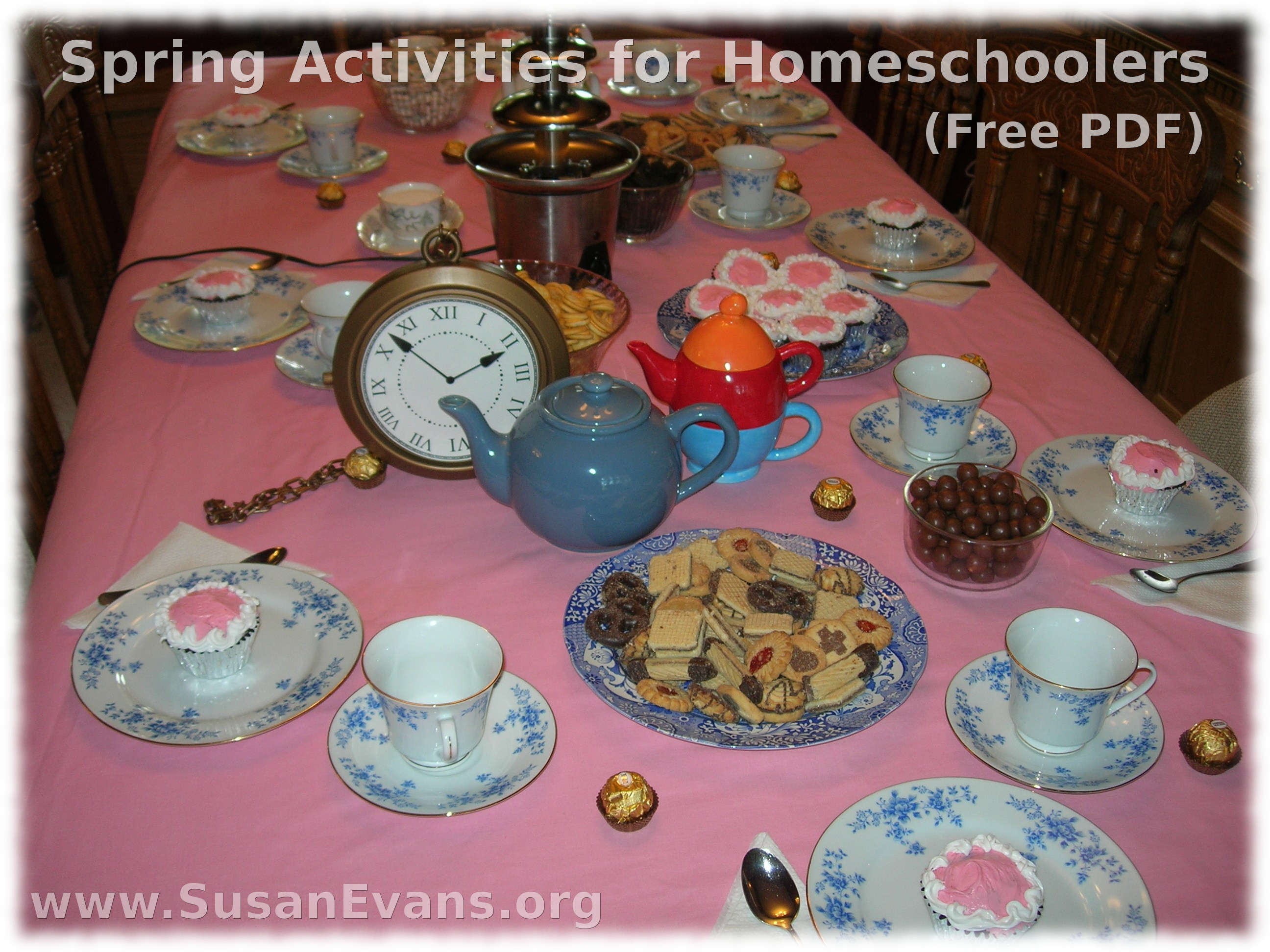
Here is a fun list of 24 spring activities for homeschoolers, including a free PDF, in case you want to check them off as you do them with your kids!
- Take homeschooling outside: sit on a blanket and read your history lesson or a great work of literature on a blanket in the backyard. Grab a picnic and take it to your tree house or fort, and read your lesson up there.
- Skip forward in your science book to a chapter on plants, insects, or other outdoor topic.
- Do a short unit study on butterflies. Watch caterpillars turn into butterflies, and do drawings of butterflies with the correct markings.
- Create a beautiful nature journal. (See Using Journals to Teach Writing downloadable DVD workshop on my website for complete details.)
- Gardening. Plant a flower garden, vegetable garden, or herb garden. Make your backyard into an oasis. Have older children map out a landscape plan of where each plant should go. Research shade vs. sun plants. Look through gardening books for inspiration.
- Plan a tea party. It can be as simple as a pot of chamomile tea and imaginary food. Or go all out and invite people, dress up with fancy hats and boas, and make lots of tasty finger foods. Put fresh flowers on the tables.
- Visit a botanical garden. Look for signs of spring. Capture the wonder of spring on video or photography. (Watch The Wonder of Spring on my YouTube channel for fun ideas on how to do this.)
- Go fishing on a nearby lake. Your child can spend one-on-one time with Dad.
- Fly a kite. Make sure it’s a windy day. You can make your own or buy one.
- Climb trees. Ones with branches close to the ground are easier to climb, especially if there are branches spiraling out like a ladder. Oak trees are the best climbing trees.
- Bird watching. Put out bird houses and bird feeders. Find a bird enthusiast and ask him where the nearby bird sanctuaries are. Take binoculars and a field guide. Study bird calls.
- Feed the ducks on a nearby river or lake. Get really close to the birds and notice their markings. Read Make Way for Ducklings and other books about ducks.
- Hatch an egg. You can buy a $20 incubator, and borrow 3 eggs from a nearby farmer. Rotate the eggs twice a day, and watch a chick hatch out of an egg. Then give the chick back to the farmer.
- Make a nature centerpiece for your table. Go on a nature hike, collecting items from nature. Come home and arrange them in a beautiful way on your table.
- Blow bubbles. You can make huge bubbles if you use glycerin. There are many activities you can do with bubbles, which I mention in my “Bubbles unit Study” article on my website. I also have the best bubble recipe in that article.
- Nature Hunt for Colors. Cut off the top part of an egg carton, and have a young child paint each hole a different color from nature. Then go on a nature walk, and have your young child find nature items to match each color.
- Explore local parks. Look on a map, and you will find lots of parks in your area. Go explore them all and choose a favorite.
- Outdoor painting on an easel. Younger kids can use tempera paint. Older kids can paint with oil paints on canvas, or with watercolors on watercolor paper.
- Study frogs. Watch a tadpole turn into a frog. Do frog crafts, read books on frogs, and watch DVD’s about frogs. (Unit Studies are great!)
- Write some original spring poetry. For inspiration, read classic poetry like Wordsworth’s “I Wandered Lonely as a Cloud,” which talks about golden daffodils in the spring. Listen to Vivaldi’s Four Seasons: Spring to get into the mood of the season.
- Make a spring lapbook, especially if you have young children. I show you how to do that on my website, in the article on “Lapbooks.”
- Start an insect collection, either of live insects in terrariums and jars, or dead insects in a traditional insect collection. Observe insects with a magnifying glass.
- Grow indoor grass, herbs, or terrariums. If you choose carnivorous plants like Venus Flytraps, make sure there is humidity, which requires a lid on the jar or a terrarium cover.
- Do a spring treasure hunt. List 10 things for your children to find in your backyard. For example, find a lady bug, dig up a worm, find ants under a rock.
If you would like to print out this list, here is the PDF:
Spring Activities for Homeschoolers
Extracting DNA
Thursday, April 12th, 2012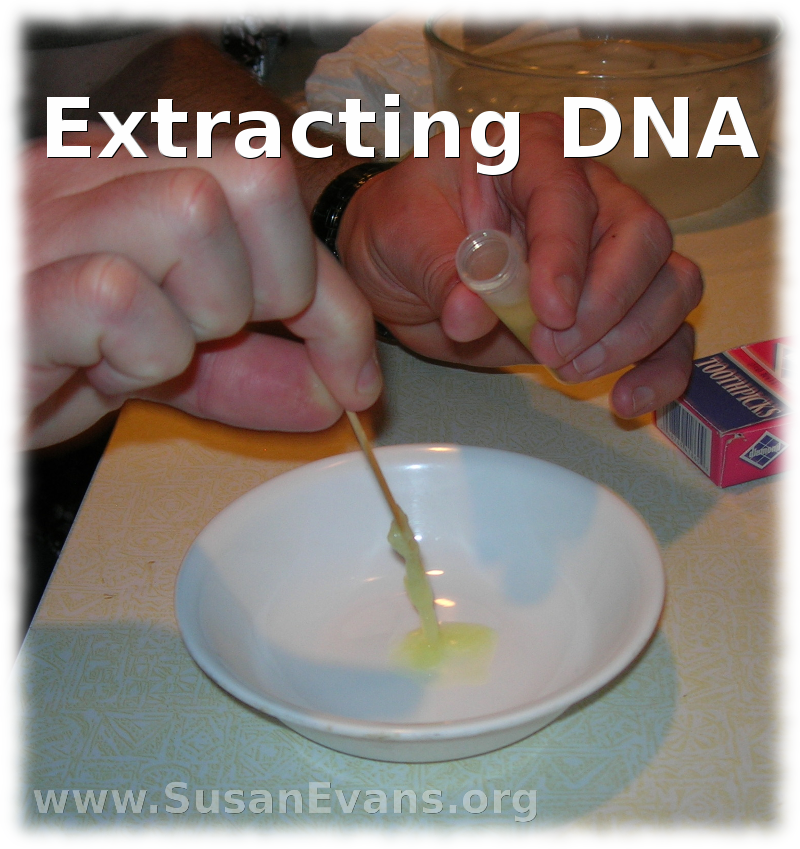
My husband did an experiment with my kids the other night. We had fun extracting DNA from an onion. My 8-year-old son Nathaniel received a DNA kit as a gift, so he was eager to try one of the experiments. First we cut an onion into small pieces, and the kids mashed it in a glass measuring cup. We added half a cup of warm water. Then we added 5 ml of powdered detergent. We stirred it.
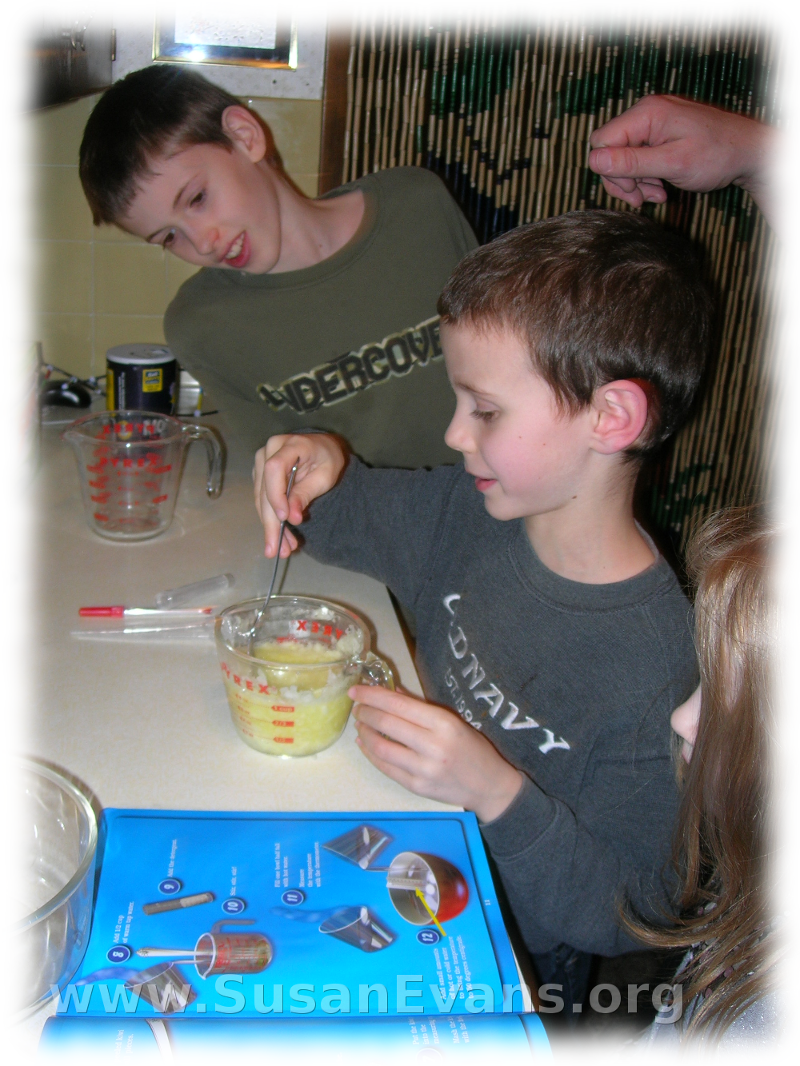
Next we filled a bowl with hot water. We measured the temperature with a thermometer, adding cold water until it was 50 degrees Celcius. We put the measuring cup with the smashed onion bits into the hot water. Then we set the timer for 12 minutes.
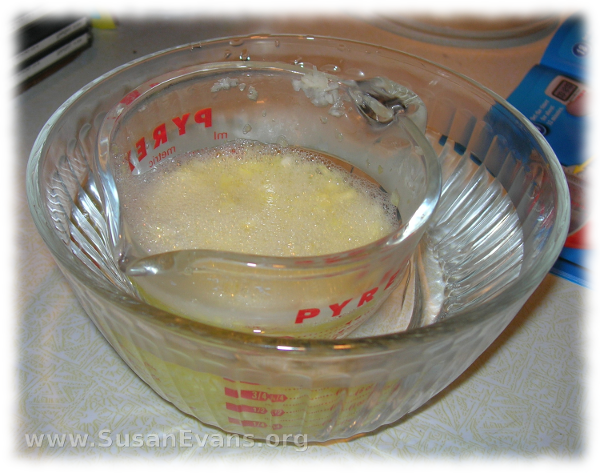
We added hot water as needed, to keep the mixture at 50 degrees, stirring from time to time. Also, we got a second bowl and filled it with ice cubes and water.
Ding. (The timer went off.) We took the mixture out of the hot water and put it into the cold water. We set the timer for 5 more minutes.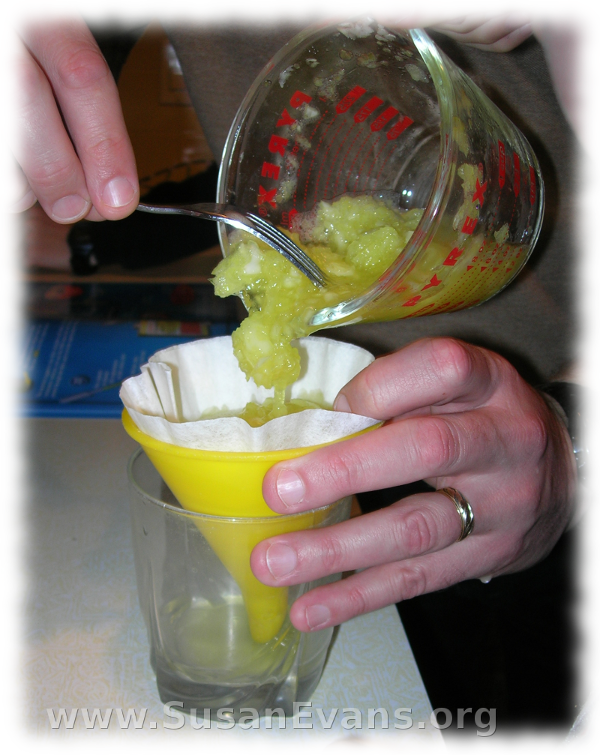
Ding. We grabbed a coffee filter and stuffed it into a funnel. Then we poured the onion mixture through the filter and funnel, and into a glass. The gunk trapped in the filter included “cell walls, cell membranes, and cytoplasmic leftovers, but not the DNA from the cell.” The DNA passed through the filter.
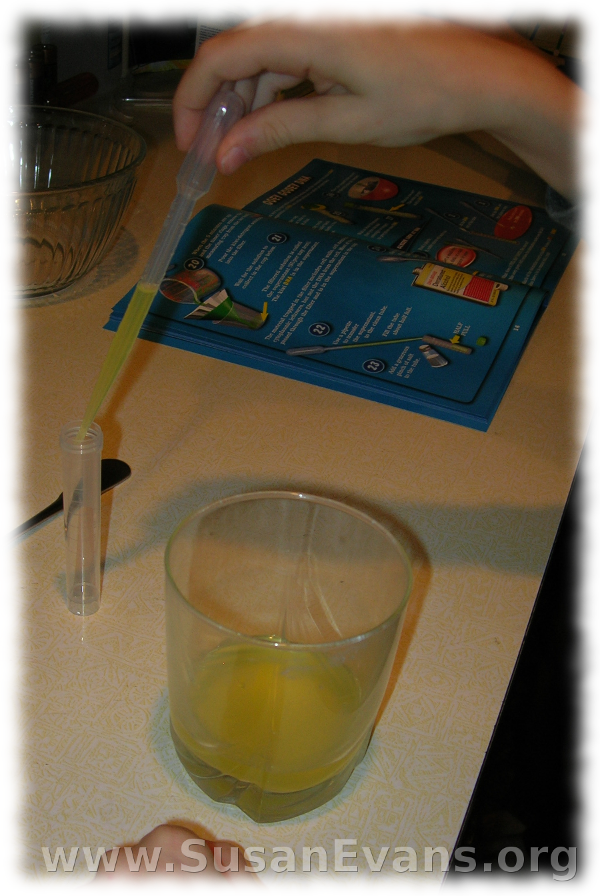
We poured the DNA liquid (called supernatant) from the glass into a test tube, filling the tube halfway. We added a pinch of salt, then dripped chilled (denatured) alcohol down the side of the tube, filling the other half of the test tube. We screwed the cap onto the tube and rocked it back and forth like we were dancing with a maracas. We placed the tube in the freezer and waited at least 10 minutes, tapping our feet impatiently.
Ding. Oh my goodness! The white gloppy stuff is DNA! It feels gooey like mucous, and and it’s stringy, like it has formed chains!

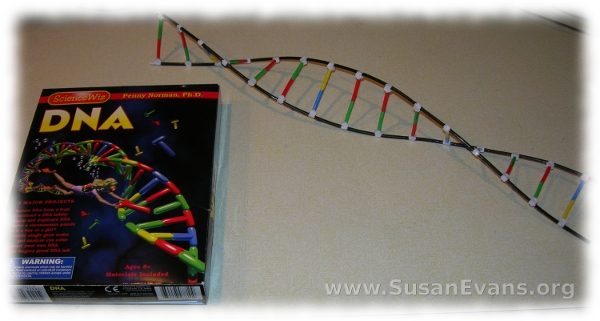
My husband also helped my kids put together a DNA chain with the plastic snap-together DNA pieces. He looked at me and said that he gives this Science Wiz DNA kit a thumbs up. The colorful instructions were easy to follow, and the experiments were fun.
 Linked to Science Sunday at Adventures in Mommydom:

Toy Trebuchet
Tuesday, April 10th, 2012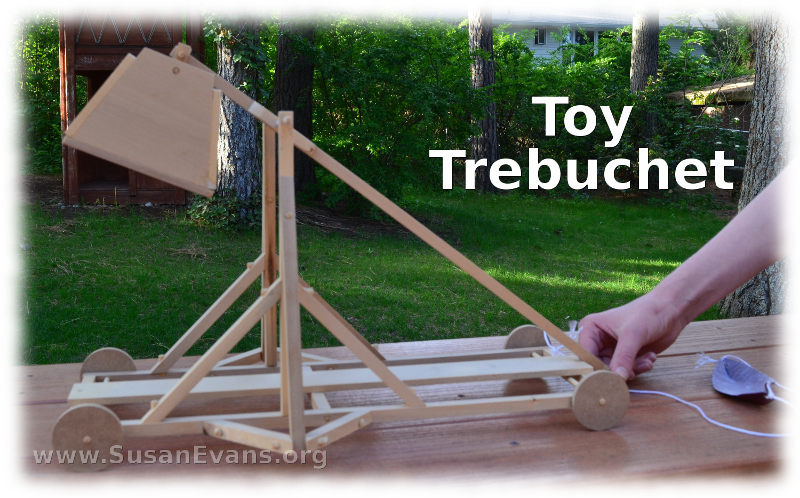
Watch my children as they play with a toy trebuchet. We put together the pieces of the wooden kit before filming the launching of objects across our backyard. After all, what kid doesn’t want to build fun historical weapons of war? Take a look at how the kids squeal as we have fun with this toy trebuchet.