Flag Football

October 11th, 2010

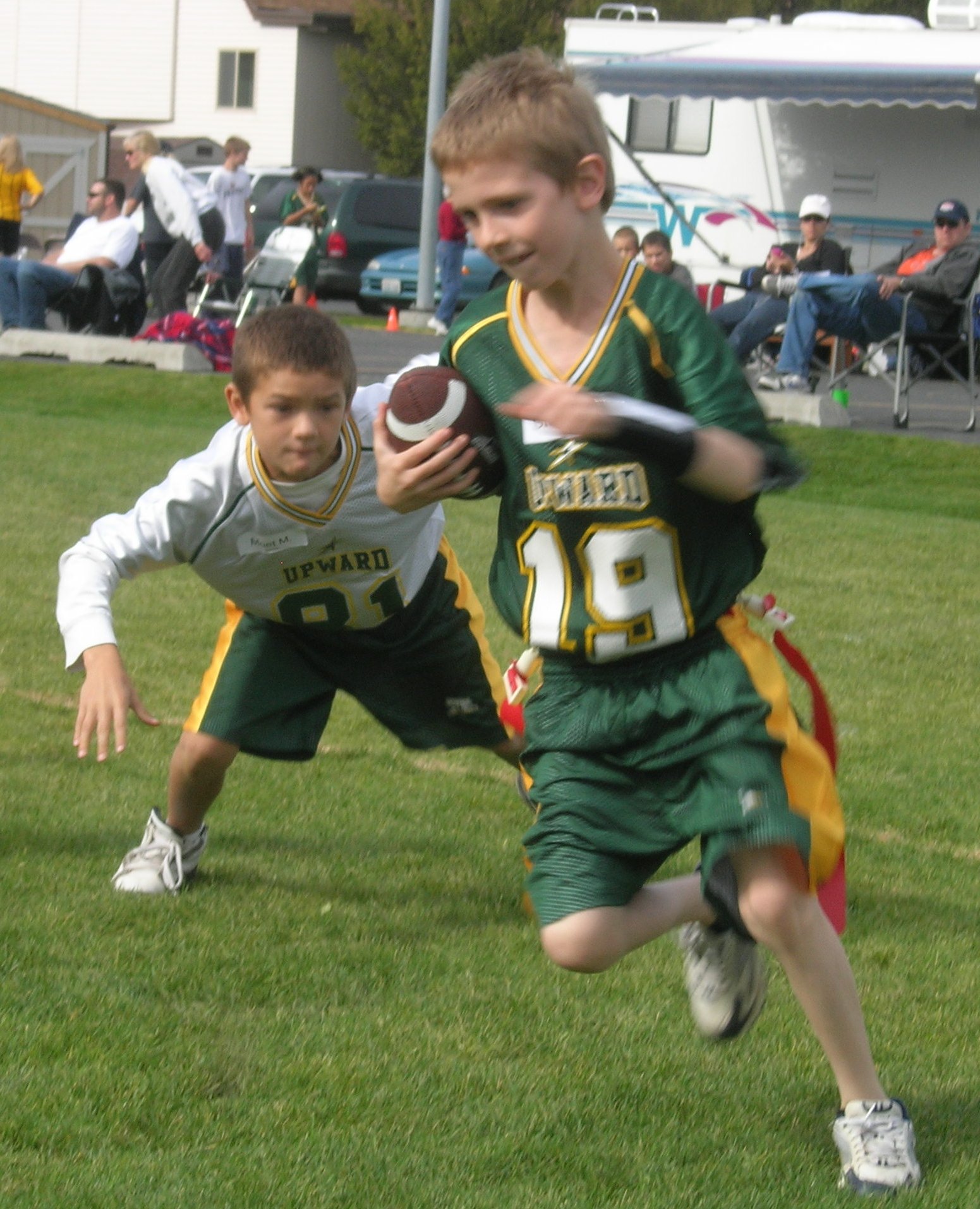
flag-footballMy 8-year-old son Stephen is playing flag football for the first time this year. It’s a Christian-based program called Upward Sports, it only lasts 8 weeks, and it has one practice per week. This makes it a good fit for homeschoolers, who don’t want their lives taken over by sports.

Before the game on Saturday, the boys line up and run through a tunnel when their name is called. Music plays over the speakers, and a big hoopla is made as everyone cheers for each kid. The boys then run to their field, where the team huddles together and prays before the game. Being a mom, I also like the fact that it’s not tackle football. Instead of tackling, the opposing team pulls off a plastic flag from your kid’s side, making a fun popping sound. The kids each have a wrist band that explains many different plays, so each boy knows what they’re supposed to do.

Why spend 8 weeks playing football? For your kid not be a dork when he is in college or beyond, and the guys invite him over to watch the Super Bowl. Part of having a full education is understanding many aspects of life, including not being completely clueless about football. It’s also good exercise, and the boys learn teamwork. (It’s hard for me to say all of this because I’ve always hated sports, and I have no idea how football is played. All I hear is “blah, blah, second down, blah, blah,” whatever that means. I understand what a touchdown is, and I understand which direction they’re supposed to be going. Otherwise it just looks like a random swarm of bees to me.)

If you plan to put your boy into flag football, I recommend that your husband teach him how to throw and catch the ball, since his entire success as a player depends on it. If your kid is a complete klutz, you might just spend a year or so throwing and catching the ball before putting him in.

Videos About Egypt

October 8th, 2010

videos-about-egypt

This post may contain affiliate links.

The Ten Commandments

We’ve watched several programs and videos about Egypt during the last month. By far, our favorite was “The Ten Commandments”, with Charleton Heston in it. It is 3 and a half hours long, so we watched it half an hour a day, until one of my sons begged to finish it one Sunday afternoon (because he said he loved it). Even though the set of two videos isn’t perfectly Scriptural, it does help you to picture and to feel what it was like for the Israelites to leave Egypt. The movie was filmed in Egypt.

The Exodus Revealed

Our second-to-favorite video was “The Exodus Revealed.” It’s a Christian video that showed evidence of Egyptian chariot wheels in the middle of the Red Sea (which was super cool!), but at a different place than what is commonly believed. There was other evidence of the Exodus story, too, like a rock that was split, with evidence of water there, even though it is physically impossible.

Egypt Eternal

The National Geographic video “Egypt Eternal: The Quest for the Lost Tombs” was boring. It contained a lot of good information, but they need to hire a better writer to make it more exciting. There was female nudity on one sarcophagus, and a sacred cow made the archaeologists excited. My oldest son said, “Why are they excited to find an idol? God isn’t pleased by that. Besides, isn’t that the same image that the Israelites made at the bottom of Mt. Sinai?” Yes, it was the one that infuriated Moses so much that he broke the Ten Commandments, and God nearly destroyed the whole nation. I told my son that the reason the archaeologists were excited about the golden idol was because it was a historic piece of antiquity that is worth a lot of money and has historic significance that can help us understand history. “Is that the way God feels about it?” my son said. “Probably not,” was my answer.

The Lost Mummy of Imhotep (thumbs down)

“The Lost Mummy of Imhotep” was not very good. It vilified Christians by saying that they destroyed a lot of ancient Egyptian artifacts and killed priests. Of course, this was back during the time when entire nations were “converted” to Christianity in name only. Regardless, there was nudity on the tomb walls, and people removed organs from the body (in a re-enactment) for the preparation for making a mummy. The blood and guts was behind the person lying down, so an adult can see that nothing is happening. This one isn’t worth watching, in my opinion, because they never even found the mummy. They were just looking. Ho-hum.

King Tut’s Mystery Tomb Opened

“King Tut’s Mystery Tomb Opened” was outstanding. Archaeologists found a new tomb from the time of King Tut. They had only a short amount of time to open the sarcophagus, because the mummy could disintegrate to dust within minutes. A hole in the coffin was already there, so they needed to open it, because it had already been exposed to air. Once a tomb is opened, there are changes in humidity, temperature, insects and other factors to deal with. Eventually they opened the sarcophagus (recorded live!) to find not a mummy, but lots of treasure! We were all on the edge of our seats the entire time. It was fun.

Secrets of Egypt’s Lost Queen

“Secrets of Egypt’s Lost Queen” was my personal favorite of all the Discovery Channel programs. This was a two-hour show, and it was an absolutely riveting, edge-of-your-seat mystery investigation. We were trying to figure out which of four mummies was Queen Hatchepsut. We knew that royalty was buried in high-quality linen, and that one arm was bent to signify royalty. Based on other ancestors and statues, we know that her eyes were far apart, and she had a wide nose and small mouth. A CAT scan of the mummies, followed by DNA evidence, was presented. Several mummies were ruled out. Finally, in a box labeled with Queen Hatchepsut’s name, a CAT scan revealed a tooth as well as organs of her body. The tooth had one root missing. One mummy had a tooth missing, with one root still in her head. The puzzle matched exactly for size, and the mystery was solved. My older two boys (ages ten and eight) were on the edge of their seats with excitement and often jumped up and down as we watched. I absolutely loved it. My seven-year-old son was scared of the mummies, especially the one called “The Screaming Mummy.” My five-year-old girl was fine with it. Because it was so long, we watched half an hour a day. So when my scared son saw “The Screaming Mummy” again, I sang, “La, la, la, la, la, la, la, la, la…” (as if the mummy was singing instead of screaming) so that he would laugh. He did laugh, and he’s fine now. This show is fun to watch, especially if your kids are older.
Vegetable Creatures

October 7th, 2010

vegetable-creatures

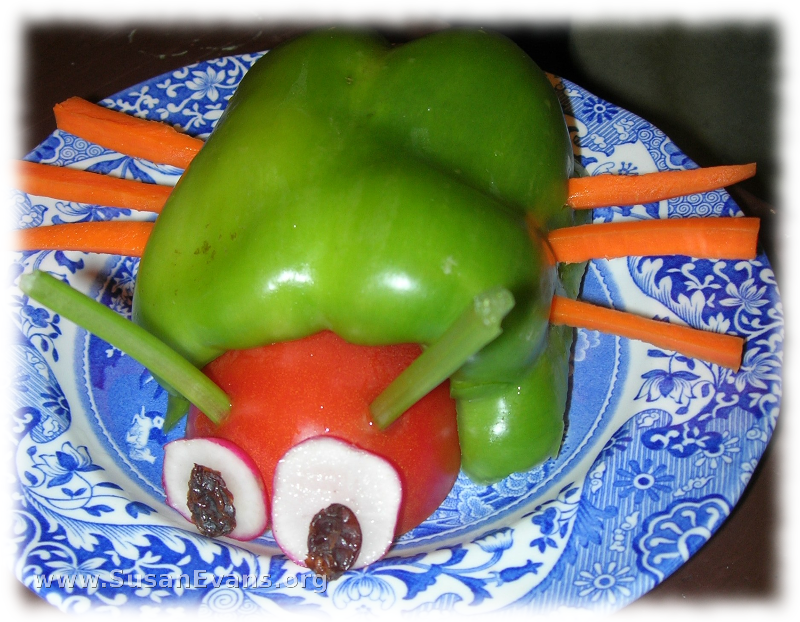
With the autumn comes the harvest, and lots of fresh vegetables are readily available for low prices. What can you do with a pile of vegetables, to make your kids want to eat them with gusto? I’ve seen lots of pictures of vegetable creatures and smiling children wanting to eat their vegetables with more enthusiasm. I decided to have my kids make insects, since that’s what we were studying. My older two sons made the main part of the body out of a half a bell pepper. They used a cut tomato for the head. Eyes were made from cut raisins on top of either radish or carrot slices. Antennae were made out of thin celery or carrots. Legs were made out of carrots. One of my sons made spots with cut (and therefore sticky) raisins.

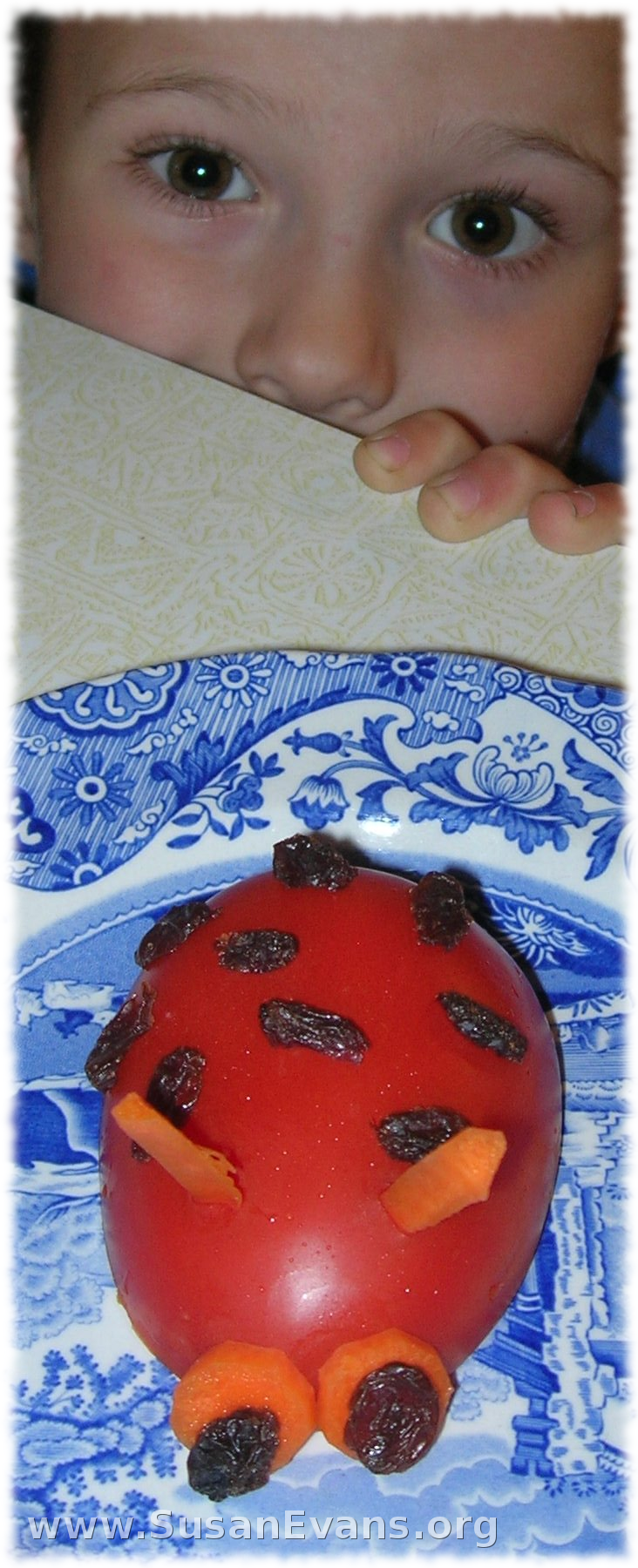
ladybug-tomatoMy third son wanted a ladybug, so he used half a tomato for the body, with raisin spots. Antennae and eyes were made out of carrots, with the eyeballs being raisins. My daughter made a caterpillar out of a cucumber, with lots of carrot feet poked in. I think I poked the holes with an ice pick. (An adult should obviously poke the holes, unless you have a teenager who is making a vegetable creature.) Raisins formed the eyes, with celery for the antennae.

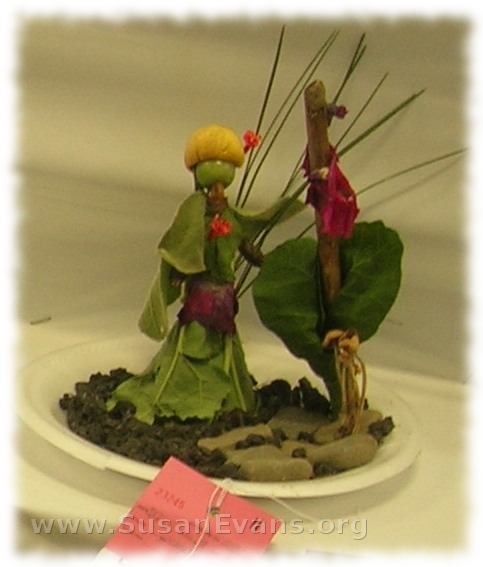
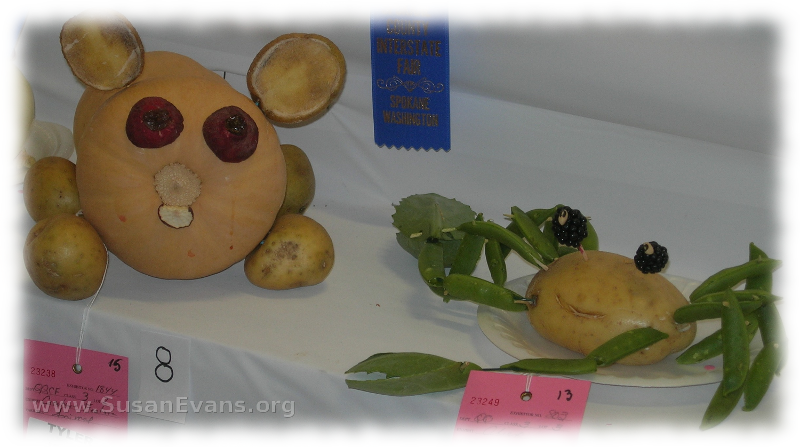
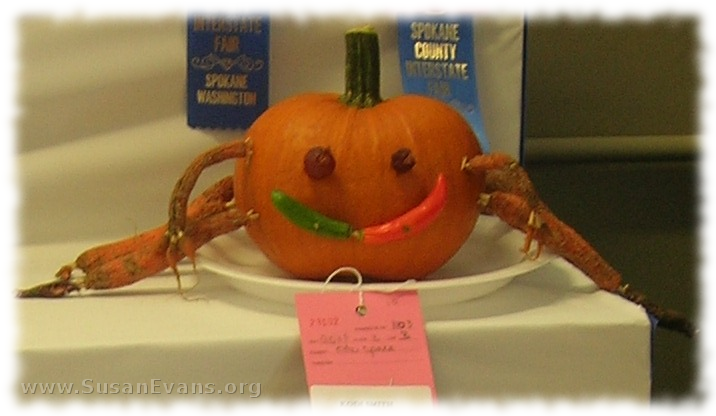
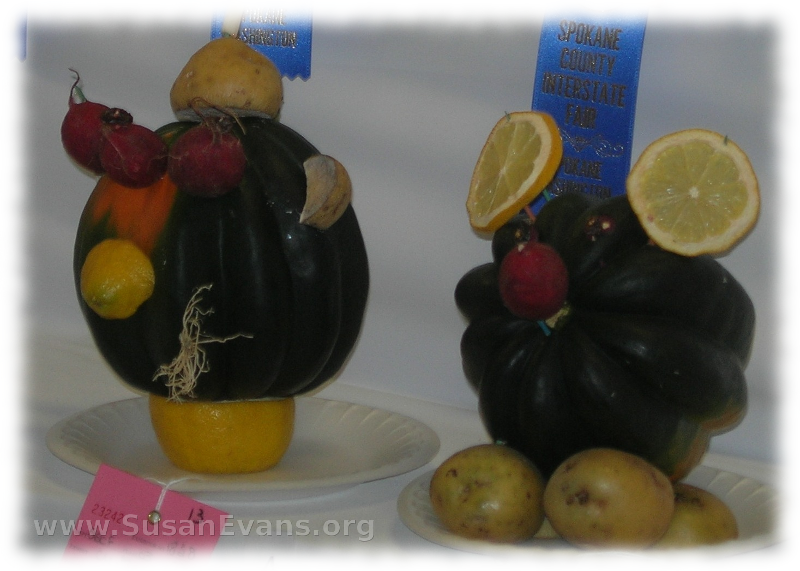
After going to the fair a couple of weeks ago, our family saw lots more vegetable creatures, and some fruit creatures, too. We saw a puppy made out of bananas, a spider made out of a coconut and a kiwi, a pumpkin creature with hot peppers for a smile and carrots for legs, and a melon head with a purple cabbage scarf and prune eyes. We saw squash creatures with lemon slice eyes, a radish nose, and potato feet. We also saw a potato crab with snow peas for legs and blackberries for eyes. Apparently you are allowed to use toothpicks to attach these creatures together when you are entering them at the fair. I even saw sticks and pine needles used, so the category must be to use things that grow out of the ground. An interesting scene displayed what looked like a woman next to a pole. Lots of cabbage was used, and many raisins dotted the ground. These fair entries sure looked like great fun to make!

melon-face

veggie-sculpture

potato-creaturepumpkin-facebanana-creaturesquash-creatures

Autumn Mobile

October 6th, 2010

autumn-mobile

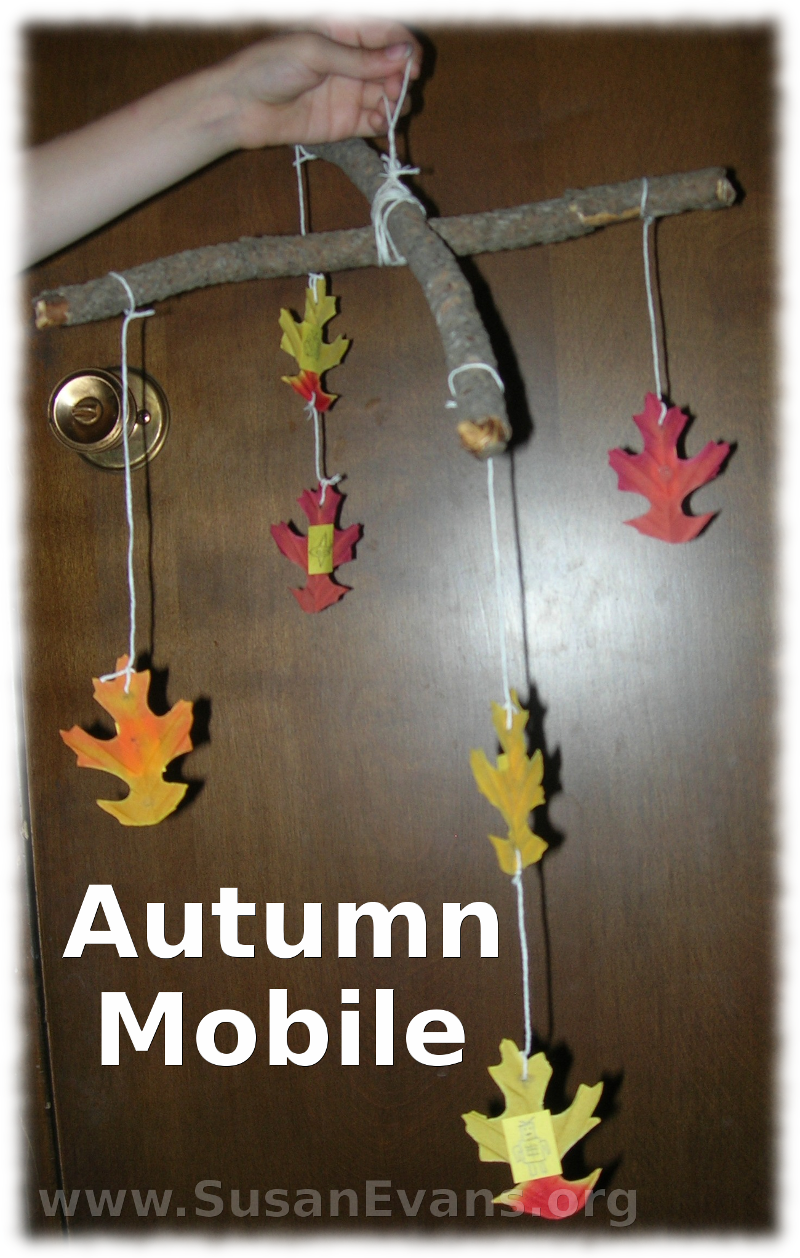
Most mobiles that I’ve seen have been lame. They look like pieces of trash as they hang somewhere, and I can’t wait to take them down and throw them away. So when my husband was in charge of a Tiger Cub Scout group, one of the activities in the book was to make an autumn mobile. I thought I would invent one that looked rustic, like you had just gone on a nature walk. Plus, the kids learned how to do lashings and to tie things together.

Start with two sticks that you find on a nature walk. Put the sticks into a perpendicular “X” shape, and lash the sticks together. (Basically, alternate winding the string around one, and then the other one, to firmly hold the two sticks in place.) Make a loop on the top to hang it up. Then poke a hole in some real autumn leaves that aren’t too dry, or use fake leaves like I did. I poked the hole with a nail, which I pounded with a hammer, but you have to have something underneath that you don’t mind getting holes in. Tie the string to the leaf, then tie it to the stick. You can also add any other nature stuff by poking holes and having the stuff hang wherever you want, as long as the mobile is balanced, weight-wise. Then you’re done.

For the Cub Scout book, the boys needed to draw something that represented each member in their family. So, for example, my son sketched a computer for Dad, a flower for Mom, a butterfly for his sister, an airplane for his younger brother, and a person drawing for his older brother. This way the mobile represented our family. The boy had to think about each member of his family, and what characteristics each person had, or what likes and dislikes. We stuck the pencil sketches (drawn on yellow paper to blend into the autumn leaves) to each leaf with some sticky tack, but you could use glue. It came out quite well, and I kept it up all autumn.