Statue of Liberty Unit Study

July 1st, 2013

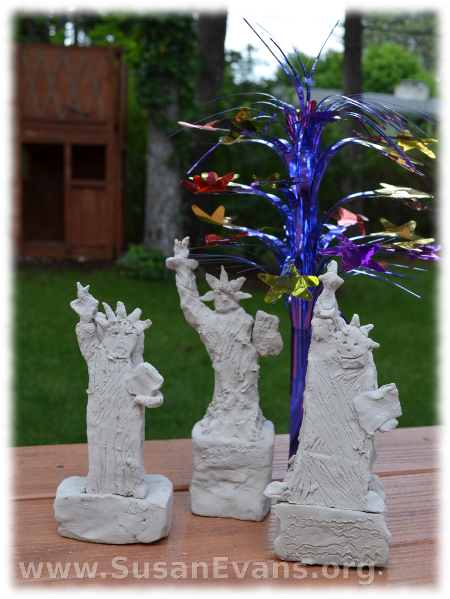
statue-of-liberty-unit-studyMy children had a fabulous time with this Statue of Liberty Unit Study.

We started by making a Statue of Liberty model. We bought a large hunk of white self-hardening clay. I took it out of the box and placed it on wax paper on top of a cutting board. I sliced it with a butcher knife into four pieces, one for each of my children.

At the table, I placed wax paper for easy clean-up. You will be banging your head against the wall if the self-hardening clay dries like cement straight onto your table, so be sure not to skip this step.

Each child should have a picture of the Statue of Liberty, to help the child draw the shape onto the front of the hunk of clay, using a plastic sculpting knife. You should cut away the clay that you don’t want. It comes off like butter. If the head looks flat like Frankenstein, you can always add more clay and fix it. If you want to erase a line, just rub your finger over it.

After getting the main shape, start adding details. Add the torch, the arm with a tablet, and the pedestal at the bottom of the statue. Then add the finishing details: the spikes coming out of the crown, the facial features, and the folds in the clothing. When you are finished, let the clay harden for two days. Take a look at how much fun my kids had with this activity:

We read the book How They Built the Statue of Liberty so that the children could understand how it was constructed. Step by step drawings helped the children see how the statue was assembled.

Here is a printable model of the Statue of Liberty, from Paper Toys. Be sure to print it on white card stock paper and watercolor light green paint on it before cutting it out and gluing it together.

Here is a free printable book full of activities from the National Park Service:

Here is a virtual tour of the Statue of Liberty:

Here is a short video tour of the Statue of Liberty:

Hundreds of unit studies like this are instantly available when you join the Unit Study Treasure Vault.
Growing Your Home Library Without Breaking Your Budget

June 3rd, 2013

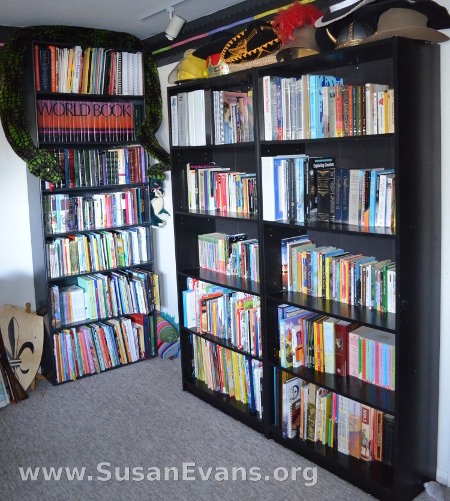
home-libraryI bet you’re wondering how I grew my home library to over 2,000 outstanding, high-quality books without spending hardly any money. I myself sometimes marvel at how God has provided over the years.

When planning my homeschooling for the upcoming school year, I always start by committing the year to God and asking Him what areas to study. We go through history chronologically, but all the other subjects besides math are delight-directed until high school, depending on what we haven’t studied yet.

Anyone who has done unit studies successfully is able to pull together lots of fun books on one topic. You can do this by going to the library, but I prefer to own the books so that they are always available to me. (I like to preview all the books as well, and only have the very best.) When I write down what topics we will cover for the following school year, the books practically pop out at me wherever I look. Here are my favorite places to find books:

  • yard sales
  • second-hand stores
  • used book stores
  • used books on Amazon
  • Craig’s List
  • library book sales
  • used curriculum sales
  • gifts from friends or family

Back when I first got married, I didn’t have the basic Bible study tools like a concordance, Bible dictionary, handbook about Bible times, maps and charts, etc. I asked myself who would feel joy if I studied the Word of God? My parents decided to get me the whole set, which was on sale, for Christmas. Our whole family is closer to God now because we have proper Bible study tools, and the credit goes to my parents. I have no doubt they will be rewarded in heaven. That set of books was not cheap, even at 50% off. What I’m saying is that if people are going to buy your family Christmas presents anyway, make known specific books that you can’t wait to purchase.

After getting the bulk of my books at yard sales and second-hand stores, can you believe that I actually made money off books, and I could buy whatever I wanted—even new books—from my list? I know you’re eagerly waiting on the edge of your seat for my secret, so here it is: I buy hardcover children’s classics and coffee table books at yard sales for fifty cents. Then I turn around with a large stack of almost-free books that look new, and I trade them in to a used book store. My used book store also sells new books, and I often get a trade-in value of $80! I do this in the summer when yard sales are in profusion. I never buy children’s books that are from a book club, because they are worthless. I’ve learned over the years which books have higher trade-in value, and which ones get rejected. But with practically no money, I’ve acquired over 2,000 outstanding, high-quality books for my home library that my family uses profusely in our homeschooling.

Eggshell Art

May 29th, 2013

eggshell-art

Make beautiful eggshell art with your kids. It’s easy and fun to make a mosaic with broken pieces of eggshell dyed different colors.

You will need the following materials:

  • eggshells
  • egg dye
  • paper towels
  • vinegar
  • drinking glasses
  • black card stock
  • pencil
  • white school glue

eggshell-art-3

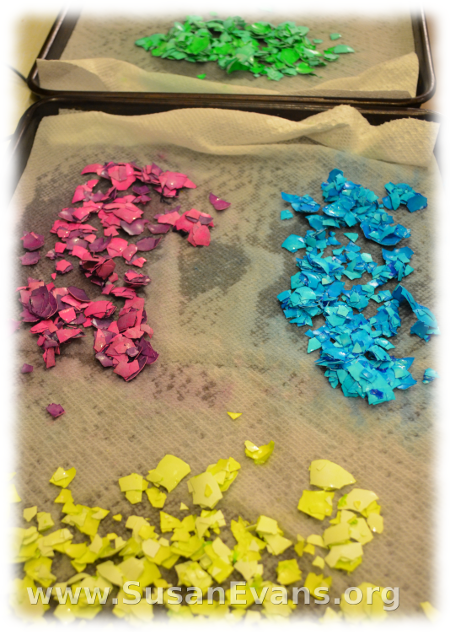
Start by dying the broken eggshells different colors. Pour half a cup of boiling water into each drinking glass, along with one tablespoon of vinegar and 10-20 drops of food coloring. Wait for 5 minutes, stirring the eggshells occasionally.

eggshell-art-5

Dump each glass into a colander in the sink, one by one. Line a cookie sheet with paper towels, and place the eggshells on it to dry. Don’t mix the colors unless you’re trying to make strange confetti. Let it dry overnight.

eggshell-art-6

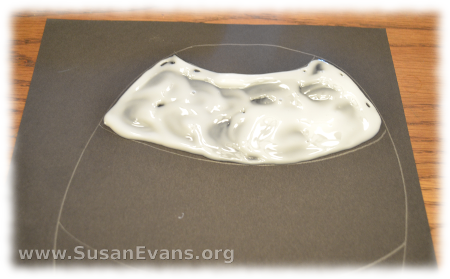
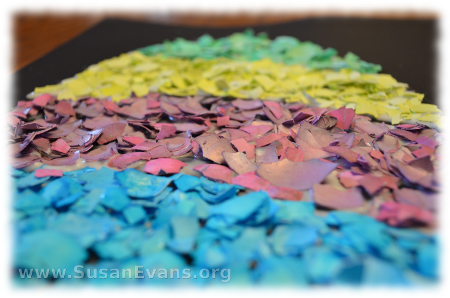
Draw a design with pencil on the black card stock paper. Then fill one area with white school glue. Dump one color of eggshells onto the page, pressing the eggshells down. Re-arrange the eggshells until they look nice. Lift the page to let the excess eggshells fall from the page. Then move on to the next color until your design is cmplete. After letting it dry, you can enjoy your finished eggshell art!

eggshell-art-2

Growing a Sweet Potato in Water

May 27th, 2013

growing-a-sweet-potato-in-water

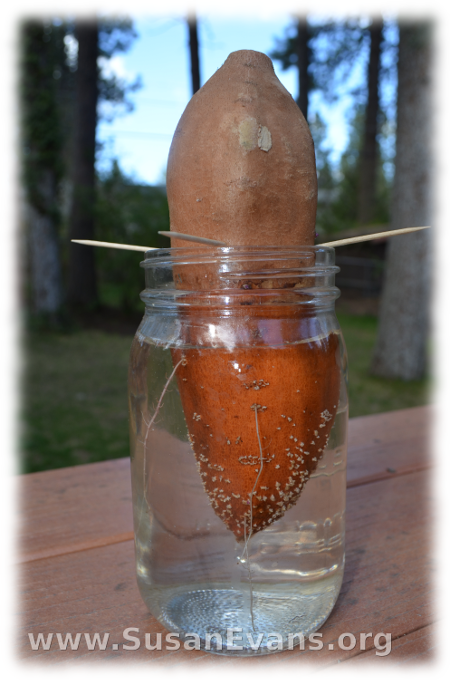
Growing a sweet potato in water is a great way to see plant roots growing. You will need a sweet potato, a jar, water, and four toothpicks.

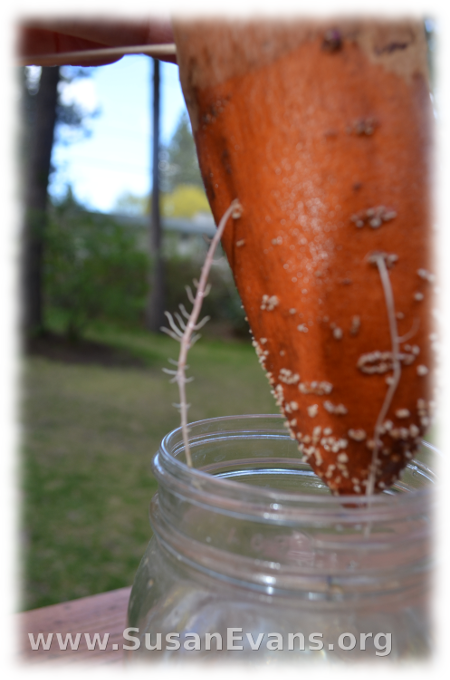
You will want to dip the sweet potato into the water about a third of the way down. Stab the toothpicks into the potato to keep it in place. Fill the jar with water. Now watch the roots grow right in front of your very eyes.

First you will see stubble, like a man who hasn’t shaved in a couple of days. This happens within the first few days. Then a few of the roots grow longer, branching out with root hairs. Since the jar is clear, you can see all this happening.

Other people buy expensive kits that have glass walls on either side so that you can see the roots of carrots and radishes growing, but the dirt is still in the way. With growing a sweet potato in water, you can see the root developing without any dirt in the way, and it doesn’t cost a lot.

growing-a-sweet-potato-in-water-2In biology this year, we studied the sections of a root, looking at the root under a microscope. The children were fascinated when they looked at prepared slides of monocot and dicot roots, which apparently have a different structure. Monocot roots have a circle shape in the middle, whereas dicots have an X shape.

The main way to know if a plant is monocot or dicot is to look at its leaves. If the leaves are straight up and down like leaves of grass, it’s a monocot. If the leaf has veins branching out, it’s a dicot.

You can see all the other activities we did in biology this year in the Unit Study Treasure Vault.
Linked to Laugh and Learn