Reading Through the Bible

March 1st, 2011

reading-through-the-Bible

My 10-year-old son just finished reading through the Bible on his own. It took him eight months to complete the entire Bible. He colored in a square for each chapter that he read. We sometimes would talk about what he was reading. He had a deep desire to read God’s Word on his own.

Now my 9-year-old son has started reading the Bible. He’s only been reading for about two months. A week ago when I was pouring myself some coffee, my son shouted, “I love Leviticus! It is my favorite book! Besides Revelation, I mean.”

“Why do you like it so much?” I asked.

“All the chapters about leprosy are so interesting!”

Go figure. My son thinks leprosy is interesting. I walked off with my coffee, totally perplexed.

Ancient Greece Videos for Kids

February 28th, 2011

ancient-greece-videos-for-kids

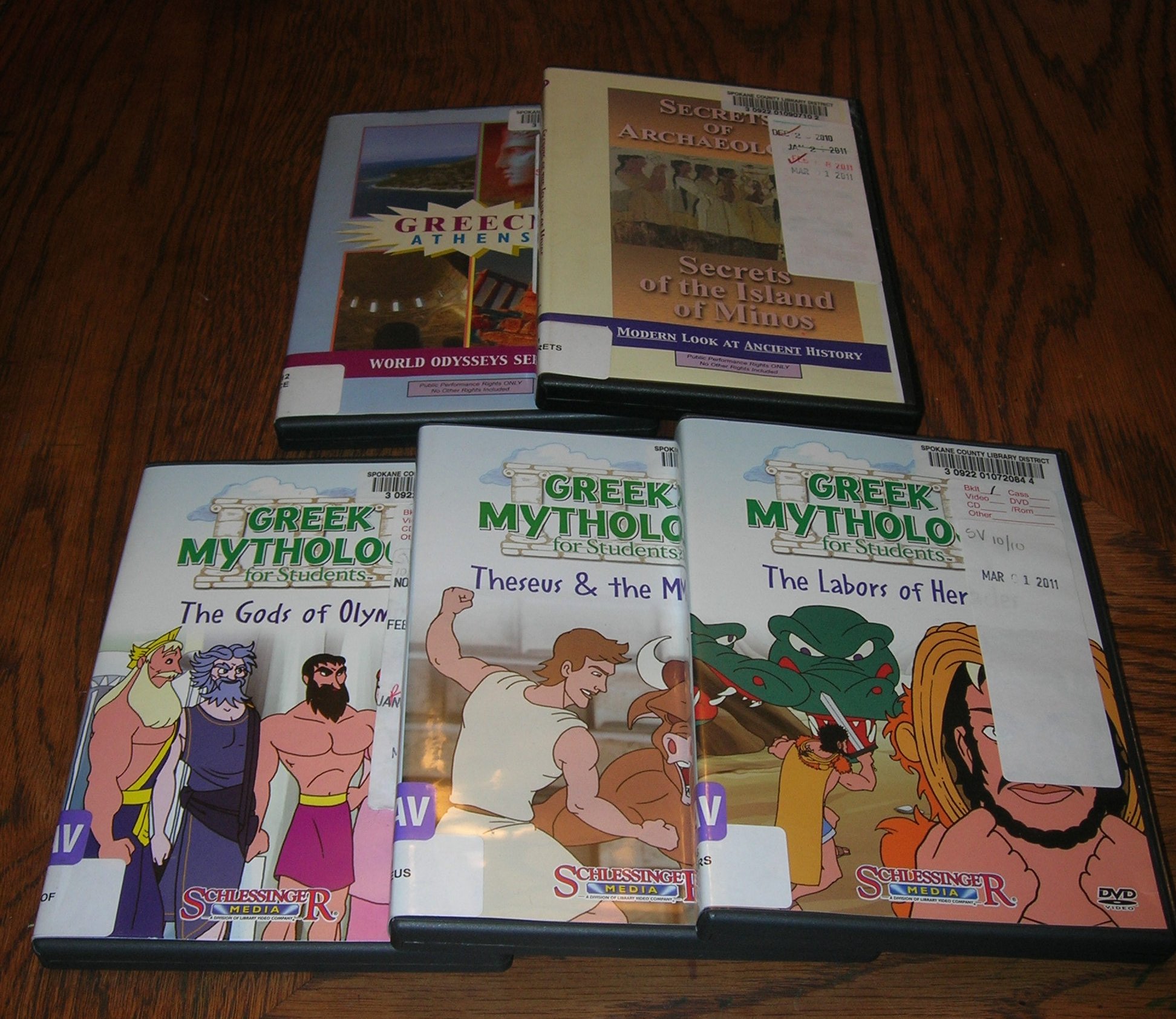
Videos are often helpful to understand history, geography, or literature. All three subjects are covered in the following Ancient Greece videos for kids. I would watch these videos with your children, so that you can comment. For example, if a cartoon Greek hero is praying to a god or goddess, I point out that it’s sin, because we’re only supposed to pray to God. I also point out that these are just make believe gods. Children know the difference between truth and fiction if you teach them about it. With that said, I found the following videos at the library:

Greece, Athens” by World Odysseys Series gets a hesitant thumbs up from me. I always like to start with a video that shows you the country you are studying, so that you can get your bearings. The views of Athens were breathtaking, and they reminded me of my trip to Athens and the Greek islands. (Back when I was single and was a student in England, I traveled the world during my free time. I got really cheap rates for being a student.) My 10-year-old son was mentally engaged and made various comments about what was being said. It was a documentary, and for this reason, my 9-year-old active son was bored half out of his mind. He briefly perked up when an underground cave was being explored. His eyes were glued to the TV for that brief scene. My 7-year-old son kept slipping down on the couch, just for something to do. And, of course, the sculptures included nudity, but it wasn’t bad. It was mostly male nudity, as my 5-year-old girl pointed out when she yelled, “It’s a wee wee!” So, taken in its totality, the video gets a hesitant thumbs up from me. If the kids hadn’t been there, I would have enjoyed the video more. Let’s put it that way.

Greek Mythology for Students” is a cartoon series. I love it! I’ve only watched three so far out of the ten. A man walks up and narrates for about two minutes. Then an animated video shows the greatest stories of Greek mythology, making all these stories accessible and understandable even to my 5-year-old. Later on, my husband was lying on the bed, telling my daughter that he had a splitting headache. She shouted, “It’s just like Zeus, whose head cracked open, and Athena came out!” I’m not sure if my husband was impressed or not, but I sure was.

Secrets of the Island of Minos” The labyrinth of King Minos was shown not only in real life (the ruins that are on the island of Crete), but in a computer animated cartoon that shows what the palace would have looked like on top of the labyrinth. Apparently the palace was like a city, and under it was the labyrinth. I’ve actually been to Crete myself, and the beautiful red columns and fresco paintings on the walls are marvelous. During the first half of the video, my boys paid attention and my 5-year-old girl fidgeted slightly. A couple of drawings had slight nudity which wasn’t offensive. However, later in the half-hour video, there were female sculptures which were, I’m sorry to say, offensive because they were highly evocative. I give a strong thumbs up to the first half of the video, and a strong thumbs down to the second half. The reason I’m giving the video a thumbs up at all is because the first half was so fascinating, it was worth watching. Right in the middle of the video is a 5 minute section on Santorini which is extremely boring. This is ridiculous because I’ve been to Santorini, and it’s beautiful. Anyway, as soon as you get to the boring bit in the middle about Santorini, shut it off. Oh, they also mentioned the lost city of Atlantis, but it was such a brief statement that it left me wanting more. I was dissatisfied about the amount of information about Atlantis.

That’s it for now. I know there are many more Ancient Greece videos for kids about the Trojan War, but I will have to pre-watch those with my husband. Maybe I’ll wait until high school for those.

Why Study Greek Mythology?

February 25th, 2011

why-study-greek-mythology

Learning Greek mythology is part of having a well-rounded education. Many great works of literature (including Shakespeare) refer back to Greek mythology, and there is no way to properly understand what the greatest authors of all time were saying without knowing about this topic. When literature refers to another famous work of literature, this is called an allusion, and allusions abound in great literature, not only in books and plays, but in poetry as well. This is because the great authors assumed that people who were reading their literature were educated. The basic building blocks of literature that the great books refer to the most are the Bible and Greek mythology.

I used to tell my public school students that even if they didn’t believe in God, they needed to know about the famous classic stories in the Bible, like the story of David and Goliath or Adam and Eve. I told them they would never be truly educated without knowing the Bible because the greatest thinkers of all time knew it, even if they were refuting it. I am not insinuating that the truth in the Bible is in any way comparable to the absurdity of Greek myths. After having read hundreds of classics, however, I can confidently say that these two sources are necessary to read in order to understand all the rest.

Now I will state the opposite side, the side that says we should not study Greek mythology because it’s the study of demons. Do not dismiss these people or consider them stupid. I have researched Scripture, and in actual fact, Paul referred to the Greek gods as demons (Acts 14:12-15; I Corinthians 10:20). Because it’s in Scripture, and the Word of God is inerrant, I have no doubt that what Paul was saying was true, at least as far as the temples were concerned. Temples were built for the worship of demons, who happened to have the same names as are mentioned in these Greek mythology stories.

Notwithstanding, Paul had studied Greek mythology thoroughly, and he was therefore able to lead the people of Athens to Christ because he was an informed person, not an ignorant person. (The Greek gods are referred to in Scripture by name in the book of Acts, so your understanding of Scripture also hinges on your ability to understand the culture in which Scripture was written.)

Even your understanding of everyday idioms such as “You’ve just opened Pandora’s box,” or “That’s my Achilles’ heel” is completely unintelligible if you forbid the reading of Greek mythology just because Paul called them demons. After all, the true study of demons is completely different than the almost comedic blunders of the Greek gods and goddesses who often have more problems than mere mortals. Flying sandals, ogres with one eye, and a green-faced woman with snake hair that turns you to stone are more like fairy tales than an invitation to study the dark side.

What it comes down to is this: if you do not study Greek mythology, you are crippling your understanding of life as well as literature. You will not understand newspaper allusions and will appear ignorant to unsaved people, who will shut their ears to you because you don’t know even the basics of what everybody knows. Be educated. Gain wisdom. Teach your children true discernment, because they will encounter much worse stuff when they leave home. They need to be prepared.

Zumba: Dance Your Way to Fitness

February 24th, 2011

zumba-dance-your-way-to-fitness

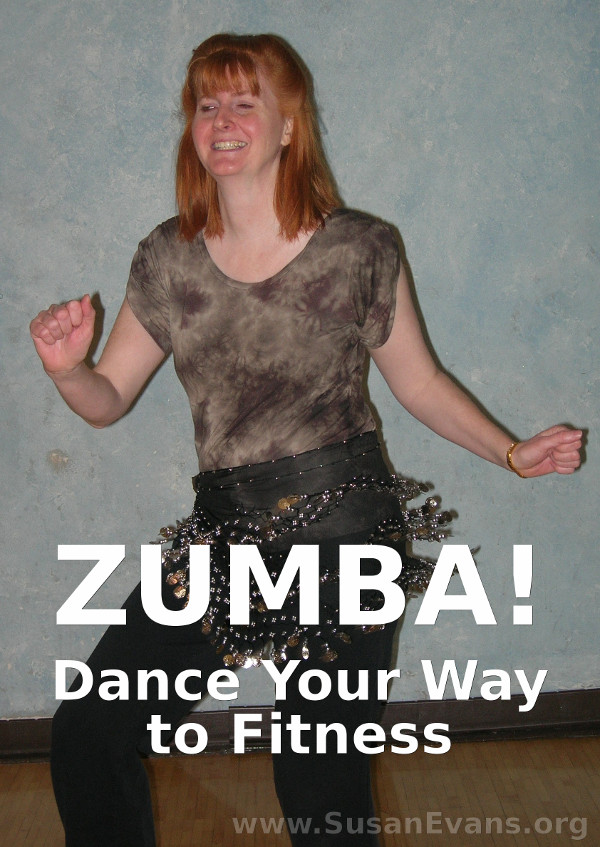
I was interested in Zumba when I first heard about it: a cardio-fitness workout with a Latin twist that was more like dancing than exercising. Someone showed me a YouTube video of it, and it looked totally fun. The problem was, I didn’t have a gym membership. Then someone gave me a website where you can look up the Zumba classes near you. You just type in your zip code, and lots of classes come up that are right near your house. Some might even be free, put on by a local church. So for all you homeschool moms out there who are having trouble losing weight and want to try something fun, this is it.

After coming home from my first Zumba class, I said to my husband, “I’ve found my sport. I think I’ll Zumba to my grave!” My husband laughed. I’m hooked.

I have to say that I felt lost that first time. There were 100 women in that local church gym. (It seems to me that church women are fatter than average. This is an upsetting observation to me, since we have the best men in the world, men who love God. Why should they be punished because they’re faithful and true? And as another aside, if we put homeschooling above taking care of our physical bodies, then we love our children more than our husbands. That’s the truth. Our bodies belong to our husbands, so taking care of our bodies is identical to taking care of our husbands.)

So there I was, my first time, messing up my footwork. I didn’t care. There were old grannies in there. About half the people stumbled around, but all of us were laughing and whooping. About half of the music was Latin music, which I’ve always loved, having grown up in a Latin country. But the other half was whatever the instructor liked. One song had the words “I like them chunky,” and we did squats so many times to the beat of the music that my legs burned. I laughed so much at that song, but really, we were doing resistance training. There’s another song that sounds like India. We hop with one foot up and down, and my leg burns so bad, but everyone else is doing it, so I don’t give up.

Last week I went to Zumba two days in a row, and when I did that India song that second day, my legs turned to jelly and I almost fell. Just modify the moves if you can’t do them. Have fun, and sort of move like everybody else is moving.

Here are my tips for starting Zumba:

  1. Find a woman who is wearing Zumba pants. Those are the die-hard fans, and they know what they’re doing. Stand directly behind one of them. This way you have someone to follow that is directly in front of you so you don’t get dizzy. My first time, I looked sideways, and I was dizzy the majority of the time.
  2. Focus only on the footwork. Forget your arms until later, after you’ve got your footwork down.
  3. Do not wear a sweatshirt. It is waaaaay too hot. A t-shirt or tank top is better.
  4. Bring water. I forgot to bring water the first time, and I was so thirsty.
  5. Have fun. Don’t memorize everything if you’re tired. Just go with the flow. By your third or fourth time, it gets way easier, and you can start adding attitude!

After the Zumba class last week, I ordered myself a Zumba skirt. It’s like a scarf with jingles that goes on top of your sweatpants. Someone let me borrow their extra skirt last time, and it was even more fun to feel the jingles swooshing. It reminded me of when I was a little girl, twirling a pleated skirt.

A week ago I went to a funeral and I had no oomph in me to do a fitness video. Let me tell you, Zumba cheered me up. I actually felt better. And last night when I got home from Zumba, my husband asked me, “Did it exceed your wildest dreams?”

“Yes, actually,” I said, “because I finally know most of the steps, so it was just pure fun!”