Job Unit Study

October 3rd, 2014

job-unit-study

For our Job Unit Study, we re-enacted the book of Job and drew pictures of his suffering. But to really understand the book of Job, you must go through hardship yourself. Until you go through a situation where you’re not sure if you will survive, when the pain lingers on and on, and yet you cling to God through it all–only then can you truly “get” this book. Because, you see, the whole point of suffering is burning off the carnal to make room for the intense presence of God.

Yes, God showed up at the end of the book of Job, and Job said, “My ears had heard of you but now my eyes have seen You.” (Job 42:5) Imagine talking to God audibly and having God Himself defend you in front of your friends, claiming that you were innocent the whole time? Imagine proving to Satan and the hosts of demons that no matter what hell on earth you have to endure, you will cling to God, so help you God? How precious is that to God–how much exquisite glory does God get when you have nothing, and yet you fling yourself onto God over and over until God finally shows up… And then, when the gut-wrenching sobs subside, you drink in the Spirit.

The Story of Job in Song

When I heard this beautiful song about Job, I could tell that the musician (Todd Smith) truly understood. When Job raises his hands to God in praise after all he’s been through, tears streamed down my face.

Drawings from the Book of Job

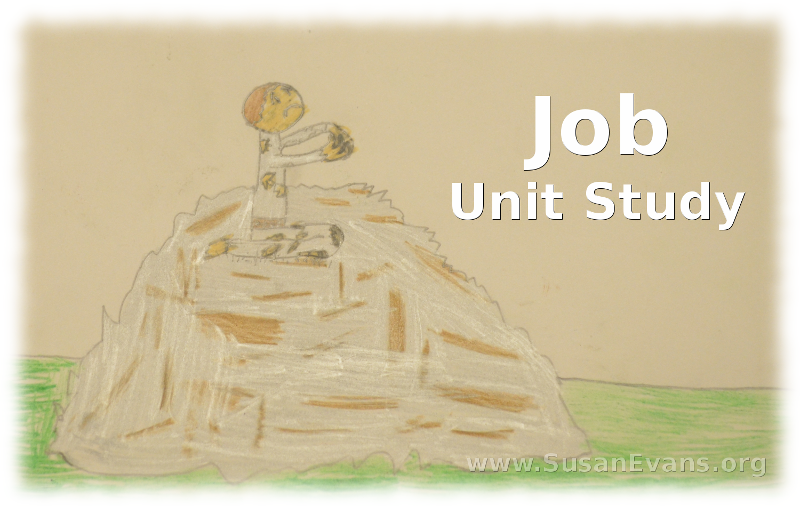
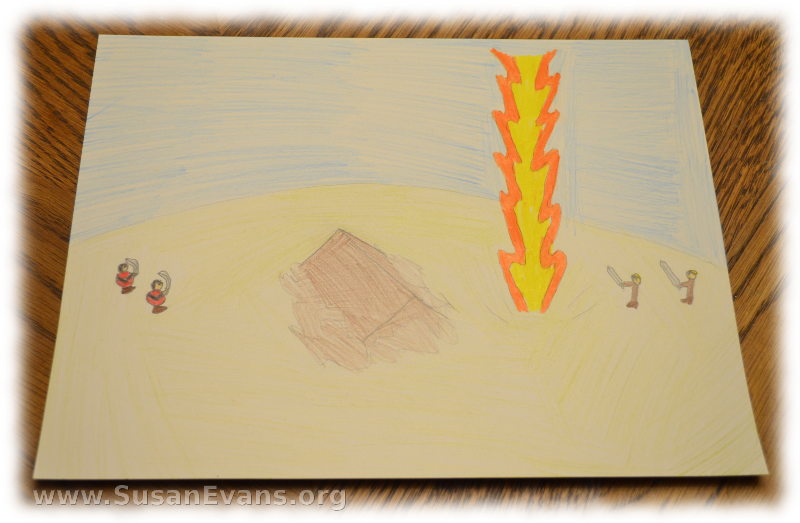
My children drew pictures of Job. This first one illustrates the misfortunes of Job that befell him so suddenly in one day. One disaster upon another befell him, so that before the previous messenger was finished speaking, another messenger had more bad news. When it rains, it pours. Read about Job’s loss of possessions and the death of his children in Job, chapter 1.
drawing-of-job

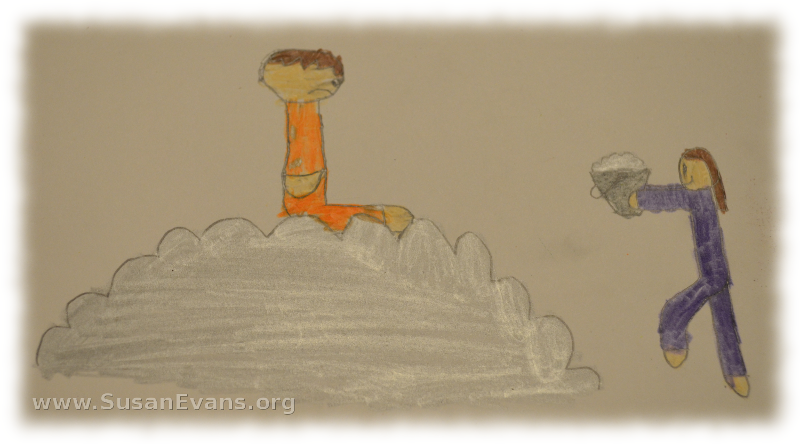
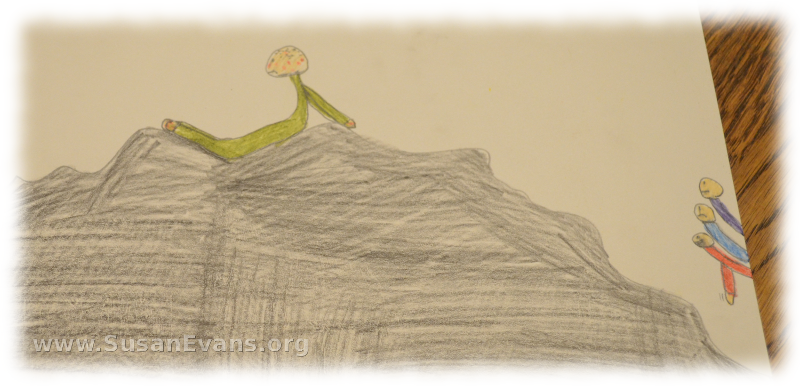
My other three children drew pictures of Job sitting on an ash heap, miserable, scraping himself with pottery. My daughter’s picture is at the top of this post. The other two are below:
job-drawing

Here are Job’s so-called friends, peeking around the corner and falsely accusing him of wrongdoing. God calls Job righteous not only at the beginning, but also at the end.
the-story-of-jobRe-tell the Story of Job

Have your kids narrate or re-tell the story of Job. They might ask you hard questions, and you will have a great discussion that will impact the rest of their lives. They might also want to write a summary of the story in a Bible journal, and what the life of Job teaches them about suffering.

Here is a re-telling of the story of Job, in a song by Michael Card:

Screaming in anguish is not sin.

Jesus screamed in anguish, and He was God. Screaming in anguish is not sin. So many Christians have falsely accused other believers who have a deep walk with God as sinning because they are groaning under the weight of agony. God never reprimands Job for his sorrow. Job cried out God-ward and was soon filled with the presence of God.

Dramatize the Story of Job

My children re-enacted the story of Job on the dirt pile at the back of our house, and our filmed version is found exclusively inside the Unit Study Treasure Vault. But I found this other version that can help you to re-enact the story:

After Suffering: Filling of the Spirit

How do you feel at the end of suffering when God has filled you with His presence? Indescribable! This song includes a lot of references to the book of Job, so I wanted to end with this song:

Sign up below for a free Bible crafts e-book!

If you enjoyed this Job Unit Study, you will love the huge Bible section of the Unit Study Treasure Vault. Bring Scripture to life for your children while supporting my family!

31 Days of Drawing through the Bible

October 1st, 2014

31-days-of-drawing-through-the-Bible

This month I am doing a series called “31 Days of Drawing through the Bible.” My children have been drawing their way through many of the greatest stories from God’s Word, and they have internalized those stories! Some of the drawings are hilarious. For many of the posts, I made a full unit study out of the Bible story, including videos, activities, and printables. I really want parents to bring Scripture to life for their children!

We began drawing back in January, so many of the posts are already here in the index. I will be adding the remaining drawings during the next few weeks. Enjoy!

  1. Drawing the Days of Creation
  2. Plagues of Egypt
  3. Tabernacle Diagram
  4. Gideon Unit Study
  5. David and Goliath Unit Study
  6. Solomon Unit Study
  7. Elijah Unit Study
  8. Ezra Unit Study
  9. Nehemiah Rebuilds the Walls
  10. Esther Drawings
  11. Psalm 1 Watercolor
  12. Drawing Proverbs
  13. A Time for Everything
  14. Song of Solomon Printable
  15. Mount Up with Wings
  16. Job Unit Study
  17. Daniel Unit Study
  18. Jonah Unit Study
  19. Old Testament Drawing and Overview
  20. John the Baptist Unit Study
  21. Bethlehem Scene
  22. Foolish and Wise Builders
  23. Jesus Walks on Water
  24. Feeding the 5,000
  25. Triumphal Entry
  26. The Crucifixion and Resurrection
  27. Pentecost Activities for Kids
  28. I Corinthians 13: Love Illustrated
  29. Armor of God Diagram
  30. Hebrews Hall of Faith
  31. New Jerusalem Drawing

Sign up below for a free Bible crafts e-book!

If you enjoyed this “31 Days of Drawing through the Bible” series, you will love all the Bible activities inside the Unit Study Treasure Vault!

#9 Acids and Bases

September 29th, 2014

acids-and-bases

This post contains affiliate links. I was compensated for my work in writing this post.

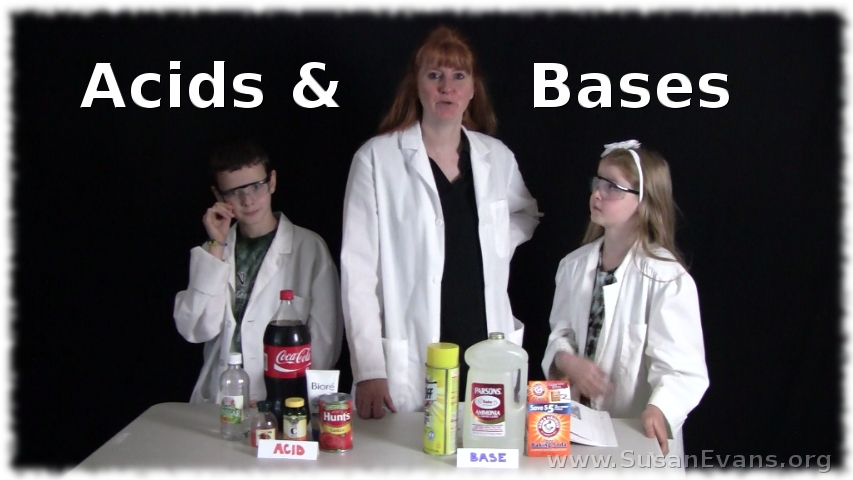
Today we are talking about acids and bases, and we will be doing an experiment to show what happens when you combine an acid and a base. We are using Christian Kids Explore Chemistry by Bright Ideas Press to study elementary-level chemistry this year with my younger two kids.

First we went through the house opening cupboards, trying to find acids and bases. The book gives some examples of chemical names for acids and bases, and you can see if you can find those chemicals by looking at the list of ingredients for household cleaning products and food.

Here are some of the items we came up with:

Acids

  • Vitamin C–ascorbic acid
  • Tomato Sauce–citric acid
  • Face Cleaning Product–salicylic acid
  • Bubble Bath–citric acid
  • Soft drinks–phosphoric acid

Bases

  • Ammonia–ammonium hydroxide
  • Oven Cleaner–sodium hydroxide
  • Baking Soda–sodium bicarbonate

Acids and Bases Experiment

Now we are going to conduct a simple experiment that shows what will happen when you combine an acid and a base:

If you want to see this fun explosion in blue and red, check out these posts:


acid-base-reaction

Don’t combine just any acid with any base, or you could create toxic fumes that could kill you.

So what is the difference between an acid and a base? Acids are chemical compounds that donate or give away a proton (hydrogen ion) during a chemical reaction. Bases receive a proton (hydrogen ion) during a chemical reaction. So when you see this reaction with the vinegar and baking soda fizzing, the acid (the vinegar) is giving away a proton, and the base (the baking soda) is receiving the proton. Isn’t that cool?

Unit Studies for Homeschool

September 26th, 2014

unit-studies-for-homeschool

Have you considered unit studies for homeschool? Last night I did a live interview about unit studies:

Here are some of the questions we covered. We ended up talking about high school and other topics, too! We never got around to the burnout question, but I’ll cover it in a future hangout:

1. What is a unit study?

When you pull together all kinds of fun activities for one topic of study, you have a unit study. Homeschoolers will do unit studies about a certain time period in history or a science topic their children want to explore. When all subjects (besides math) are tied together, retention is higher. For a Renaissance unit study, you could enjoy watching Shakespeare in the park, write poetry, read about Leonardo da Vinci, and create your own invention.

2. How do you put together a unit study?

First you would collect books from the library about this topic. I always look for supporting DVD’s, which you have to be careful to preview before showing your kids. You can decorate a notebook about that topic, and have your children do fun writing assignments about what they are learning. Create field trips and hands-on learning experiences to go along with your study, and you will have mastered that topic.

3. How can you get ahead on academics through unit studies? How does that work?

You can definitely get ahead academically through unit studies in the content areas. Those would be history and science. We covered all the time periods in history several times, and we covered each topic in science in-depth. We ran out of science topics, and my kids were ready for high school science at age 10 because we had gone so in-depth on each of the topics. My son Stephen began high school Biology at age 10 and aced all his Biology exams. He now wants to be a microbiologist.

4. Do you have to do crafts if you use unit studies?

No, you do not need to do crafts if you do unit studies. But part of what unit studies stands for is hands-on learning. So you can cook a meal from the time period you are studying (that’s not a craft), or go on a field trip that correlated with that topic (which is also not a craft). Many families who do unit studies don’t do any crafts but instead create a notebook where they can bring to life that topic through drawings, creative writing, or 3-dimensional pages that have fold-outs or envelopes that you put something into.

5. How do you not burn out while doing unit studies?

That’s a great question and one that I’m asked a lot. I do unit studies in spurts. We might only read living books for 3 weeks, and then on the fourth week we do a ton of hands-on activities all back-to-back. If you’ve just had a new baby, you can read to the kids for a while. One year when I was exhausted from a new baby (or some other trauma in my life), I read great classic works of literature for the Middle Ages, and it wasn’t until I regained my strength by the end of the year that we did tons of hands-on activities like a Medieval feast and a huge cardboard castle. So you can homeschool with unit studies, and it doesn’t have to be labor intensive.